Varroosis - Varroa destructor mite
Varroosis is a serious disease of honey bees caused by the parasitic mite Varroa destructor (formerly V. jacobsoni), known as the Varroa mite. It feeds on the hemolymph of larvae, pupae, and adult bees and can transmit additional infections. Fertilized females, visible to the naked eye, enter brood cells just before capping, where they lay eggs and complete their development. After a worker or drone emerges, the female and her offspring leave the cell, repeating this cycle several times. Heavy infestations result in deformed bees or dead pupae, and combined with other stressors, varroosis can weaken a colony to the point of collapse.






Varroosis in Bees – Varroa destructor
What is varroosis and why is it such a serious threat to your bee colony?
Varroosis is a serious parasitic disease that affects both bee brood and adult bees. The causative agent of this disease is the mite Varroa destructor, whose original host was the Eastern honey bee (Apis cerana). This parasite gradually spread from Southeast Asia to Europe and now threatens honey bees on all continents except Australia and Oceania.
Life cycle and spread of the mite
Varroa destructor is visible to the naked eye. A female mite enters a brood cell shortly before it is capped, where new developmental stages emerge from eggs, mature, and mate. When the adult bee emerges, it leaves the cell together with several young female mites. Each female can repeat this cycle up to seven times. The mite prefers drone brood and does not attack queen cells.
The mites feed on the hemolymph of larvae, pupae, and adult bees and can transmit other infectious diseases. They spread mainly through drifting infected drones and workers, swarming, robbing of healthy colonies, and the movement of infected colonies.
Symptoms and impacts of infection
Varroosis causes bees emerging from heavily infested brood to show deformities such as underdeveloped wings, abdomens, and stunted legs. These affected bees are usually removed from the hive by healthy workers, where they subsequently die. In cases of severe infestation, bee pupae die before emergence.
This disease, especially when combined with other factors such as viral infections, chronic poisoning, or insufficient nutrition, leads to the gradual weakening and possible collapse of the bee colony.
Monitoring and prevention of varroosis
Every year in the Czech Republic, winter debris from each colony is examined. Samples must be submitted by February 15. These results help determine the level of infestation and select appropriate treatment methods. If the average infestation exceeds three mites per colony, beekeepers carry out early spring treatment using registered veterinary medicinal products. These measures should be completed by April 15, taking into account climatic conditions and spring colony development.
An up-to-date overview of approved medicines and correct treatment procedures can also be found on the website of the Institute for State Control of Veterinary Biopreparations and Medicines.
Varroosis represents the main threat to the health and vitality of bee colonies. Through active monitoring and timely treatment, its impact can be minimized and colonies can be kept strong and healthy. For more information or assistance, contact your local beekeeping organizations.
Veterinary medicinal products for bee colonies
In beekeeping, it is important to keep in mind the selection of appropriate veterinary medicinal products that are registered and available without prescription. These products can be effective tools in the fight against bee diseases such as varroosis.
A list of key products specifically intended for the treatment of bee colonies that you can find with us includes:
-
Apiguard 25% Gel – Ideal for late summer treatment. Do not use if temperatures fall below 15 °C. It is important to avoid use during nectar flow to prevent alteration of honey flavor.
-
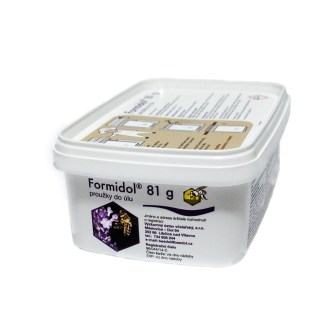
Formidol 41 g & 81 g – Strips effective at temperatures above 20 °C; suitable for spring treatment.
-
Thymovar 15 g – Use at temperatures between 15–30 °C after the end of nectar flow. Unsuitable combs must not be extracted in spring.
-
Formicpro 68.2 g hive strip
-
Oxuvar 41 mg/ml concentrate for solution for therapeutic treatment of bees
-
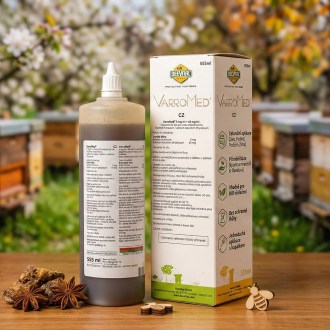
VarroMed 75 mg/ml + 660 mg/ml dispersion for hive use
-
VarroMed 5 mg/ml + 44 mg/ml dispersion for hive use
Both Formidol products based on formic acid are particularly suitable for warmer conditions. Products such as Apiguard and Thymovar require specific conditions to achieve maximum effectiveness and minimize undesirable effects. Remember that it is always essential to thoroughly study the instructions for use and carefully consider which approach is appropriate for the specific circumstances of your beekeeping operation. Proven methods confirm the importance of informed and responsible application.