Honey Refractometer
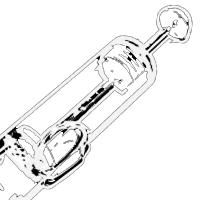
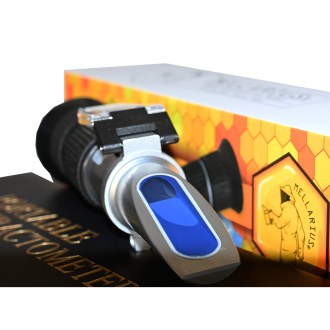
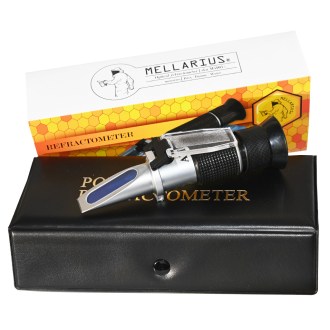
Honey Refractometer is an optical device that enables beekeepers to accurately determine the water content and sugar concentration in honey. The optical refractometer uses the refraction of light, which is displayed on a scale in the eyepiece as an interface between the illuminated and non-illuminated area. This scale is used to measure the percentage of water and sugar content. A refractometer is particularly helpful during honey extraction, when the beekeeper takes samples from the honeycomb and applies them to the refractometer to easily see the values in the eyepiece.
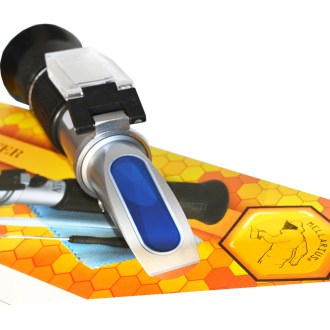
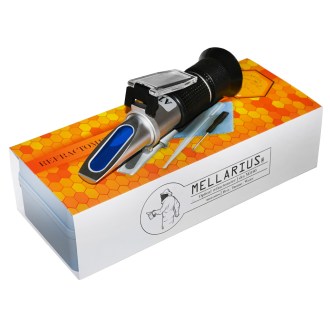
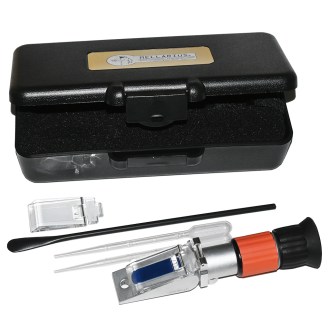
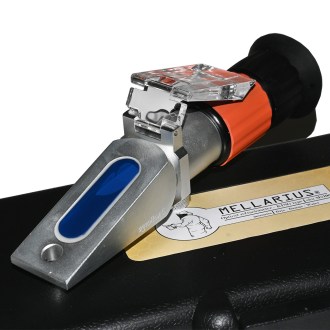
Honey Refractometer: Confidence in Properly Ripened Honey
Extracting honey is not just about timing, but above all about ripeness. That is why a honey refractometer belongs among the essential tools of every beekeeper – in just a few seconds it shows the water content (moisture) in honey. Thanks to this measurement, you can easily verify whether the honey is suitable for extraction, sale, and long-term storage, while significantly reducing the risk of fermentation.
The range includes both optical (analog) and digital refractometers designed specifically for honey – suitable for hobby beekeepers as well as larger honey-processing operations.
Why Measuring Honey Moisture Is So Important
Water content is one of the best indicators of whether bees have truly “finished” the honey. Capped combs are a good guideline, but in practice values vary depending on nectar flow, weather, type of honey (blossom vs. honeydew), and how quickly the honey is extracted after uncapping.
-
Fermentation prevention: higher moisture supports yeasts and can spoil an entire batch.
-
Better storability: ripe, dense honey maintains stable quality and flavor over time.
-
Confidence when selling: meeting regulatory requirements and customer expectations is often just a guess without measurement.
In practice, beekeepers most often aim for values around 18–20% water (depending on honey type and desired quality). If you want clear, reliable numbers, a refractometer is the fastest solution.
How to Choose a Honey Refractometer
For meaningful measurements, focus on several details when choosing a refractometer, as they affect both accuracy and ease of use.
Scale and Measuring Range
The most important scale is Water % (honey moisture). Common ranges are approximately 12–27%. Many models also include Brix and Baumé scales – useful additions, but for deciding “extract now or wait,” moisture is the key value.
ATC (Automatic Temperature Compensation)
Honey and optics both react to temperature. The ATC function helps compensate for the influence of normal temperature variations when working in the apiary or honey room (typically around 10–30 °C, depending on the model). This allows for more reliable readings without lengthy calculations.
Analog or Digital
-
Analog refractometer: durable, battery-free, quick reading through the eyepiece – a proven classic for daily use.
-
Digital refractometer: comfortable display reading, easy operation, and speed – ideal for frequent measurements.
Construction and Optics
With beekeeping equipment, quality pays off twice over. A solid body, clear scale image, and durable prism mean easier readings and more stable results, even during intensive use throughout the extraction season.
Procedure: How to Measure Honey Correctly with a Refractometer
-
Prepare the sample: if measuring honey from a container, stir it thoroughly to ensure the sample is representative. Avoid foam and air bubbles.
-
Apply honey to the prism: open the cover plate and place 1–3 drops on the clean prism.
-
Spread evenly: gently close the plate so the honey covers the surface without “dry” spots.
-
Read the value: point the refractometer toward the light and read the Water % scale (or the display on digital models). Adjust the eyepiece focus if necessary.
-
Clean the instrument: after measurement, rinse the prism with lukewarm water and gently dry it with a soft cloth.
Practical tip: Take several measurements from one batch. When extracting from frames, you can also roughly check honey directly from the cells (after uncapping). After extraction, always measure from a thoroughly mixed container – this gives a true average of the entire batch.
Calibration and Maintenance
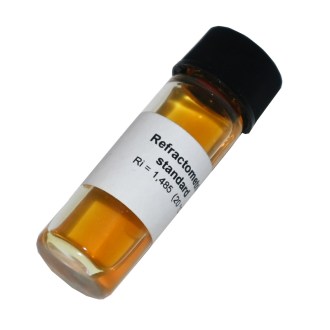
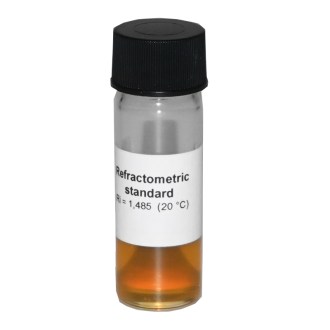
For accurate results, regular calibration is essential. The method varies by refractometer type: some models are calibrated with distilled water, others require a calibration solution designed for honey refractometers. Always follow the manufacturer’s recommendations and perform calibration especially before the season, after a long break, or when results start to differ from expectations.
After each use, clean the prism of honey residues and store the instrument in its case. Do not immerse the entire refractometer in water and do not use abrasive cleaners on the optics – this could cause scratches and distort readings.
Frequently Asked Questions from Beekeepers
Is capping alone sufficient?
Capping is a good sign, but it does not always guarantee low moisture. In variable weather or with certain nectar flows, it pays to verify the value – a refractometer provides certainty instead of assumption.
How many times should I measure one batch?
Ideally several times (e.g. 3–5 readings). For larger containers, mix the honey first so the measurement reflects the entire volume.
Which is better: analog or digital?
It depends on personal preference and measurement frequency. Analog models are simple and durable; digital ones are more comfortable to read. What matters most is that the refractometer is designed for honey, has a clear scale, and can be reliably calibrated.
A honey refractometer is a small device with a big practical impact: it protects the quality of your work, helps maintain consistent honey parameters, and provides confidence during extraction and sale.