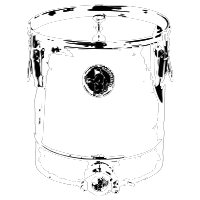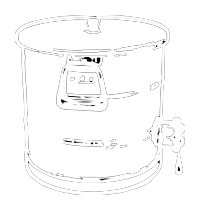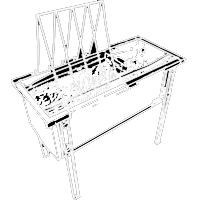
Wax melters with gas burners
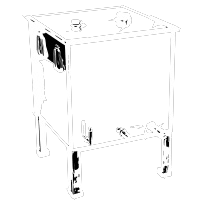
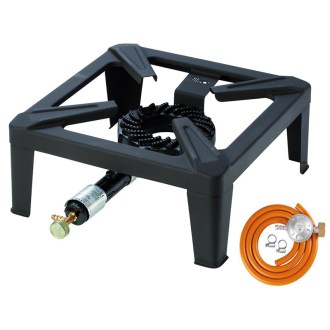
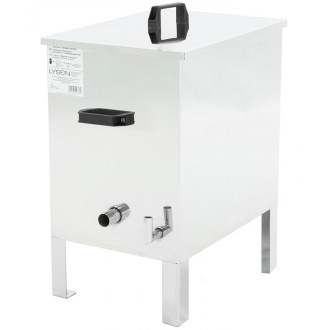
In this category you will find our beeswax melters with a gas burner. All models are designed for direct flame heating – the gas burner is included in the package or can be purchased separately. Wax is extracted using hot steam, most commonly powered by propane-butane; some versions also feature a press for faster beeswax extraction, and selected models are suitable for disinfection as well. The gas-powered design is powerful, heats up quickly, and does not require electricity, making it ideal for outdoor use at the apiary. The melters are made of durable stainless steel and typically consist of a water tank and a basket for frames or combs. We offer various sizes and designs suitable for all frame dimensions.



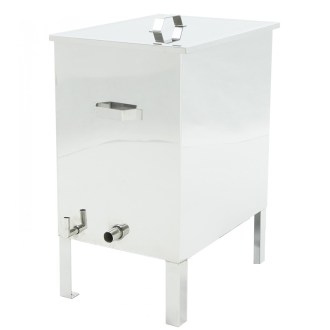
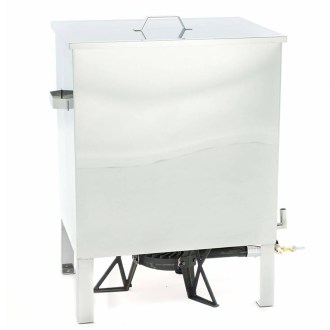
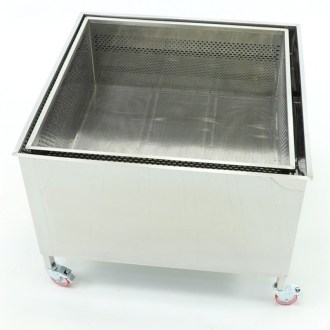
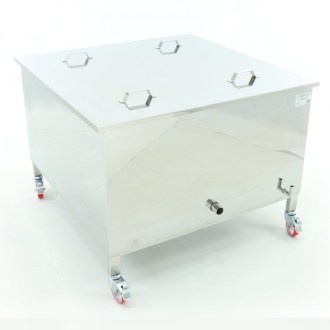
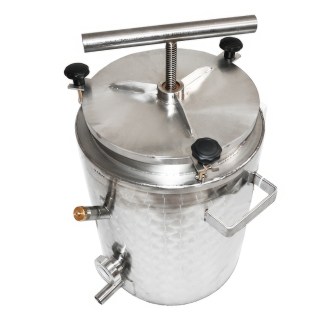
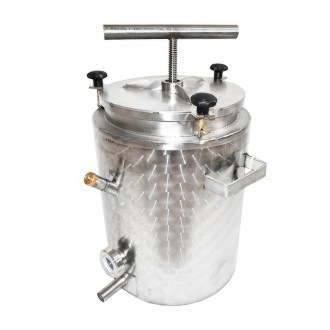


Beeswax Melters with Gas Burner
Do you want to obtain pure beeswax quickly, with high yield, and without relying on the electrical grid? Stainless steel steam beeswax melters with gas heating are a proven choice for beekeepers who process cappings, old combs, and wax comb and need reliable equipment for use both at home and directly at the apiary. The combination of steam melting and a powerful gas burner provides stable performance, easy regulation, and a cleaner end result.
Why choose a gas-heated beeswax melter
A gas burner can quickly generate the required amount of steam, making wax melting efficient even in cooler conditions. Compared to solar wax melters, you are not limited by weather, and compared to some electric models, you gain significantly higher thermal output and better mobility.
-
Mobility without compromise: ideal for apiaries without access to 230 V power – all you need is a propane-butane cylinder, a regulator, and a safe working area.
-
Fast melting and high yield: intensive steam penetrates the combs and efficiently releases the wax.
-
Operational hygiene: hot steam helps reduce pests (e.g. wax moth) and increases the cleanliness of frame processing.
-
Durable construction: stainless steel withstands moisture, heat, and substances contained in combs, and is easy to clean of propolis and wax.
How a gas-powered steam wax melter works
Steam melting is simple yet highly effective. Water in the lower section is heated by an open flame, and the resulting steam passes through a basket with frames or loose comb, gradually separating the wax.
-
Water is poured into the lower container and the unit is placed securely on a non-combustible surface.
-
The gas burner heats the water to boiling and hot steam begins to form.
-
Steam passes through the material in the basket; the wax melts and flows downward together with the condensate.
-
The mixture flows out through an outlet (or drain) into a prepared container or mold.
-
After cooling, the wax solidifies into a “cake,” while cocoons and solid residues remain in the basket.
How to choose a wax melter and gas burner
The right setup will save you both time and fuel. When choosing, it is worth considering capacity, compatibility with your frame size, and heating power.
Basket capacity and frame size
Consider how many frames you want to melt in one batch. Compact models (e.g. for approx. 10–12 frames) are practical for hobby beekeepers, while larger operations benefit from high-capacity baskets with faster workflow. Always verify that the basket matches your frame size (e.g. 39×24, Langstroth, Dadant).
Gas burner output and regulation
Burner power affects the time needed to reach boiling and the stability of steam production throughout the batch. Smooth flame regulation is practical, allowing you to adjust heating to the amount of material and current conditions (ambient temperature, water volume).
Material and construction (stainless steel vs. galvanized)
For long service life and clean wax, we recommend food-grade stainless steel. Stainless steel does not corrode, is easy to maintain, and keeps the wax free from unwanted contamination. With equipment that is regularly heated and cooled, material quality becomes apparent very quickly.
Tips for cleaner wax and smoother operation
Practical tip: Pour a small amount of hot water into the container into which the wax is drained. After the wax cake solidifies, fine impurities remain in the water or on the underside of the cake, which can then be easily scraped off.
-
Work ideally outdoors or in a very well-ventilated area, sheltered from wind so the flame remains stable.
-
Monitor the water level – boiling the water dry can damage the bottom of the container and compromise safety.
-
Load material into the basket so that steam can flow freely (do not overfill or compress forcefully).
-
After melting, allow the unit to cool down before removing wax residues and cocoons.
Safety when working with gas and hot wax
Beeswax is flammable and gas heating provides high output. Therefore, always follow basic safety rules: stable placement, checking connections, and working without haste. Never leave the melter unattended.
-
Place the melter on a level, non-combustible surface, out of reach of children and animals.
-
Check the tightness of hoses and connections, and use a suitable pressure regulator for propane-butane.
-
Handle hot parts with gloves; prepare a safe place for setting down containers and molds.
-
We recommend having a fire extinguisher nearby and basic protective equipment (glasses, gloves).
Frequently Asked Questions
- Can the melter handle old combs and dark brood comb?
-
Yes, steam melting is commonly used for older combs. However, expect a higher proportion of impurities, and we recommend finer filtration or two-stage cleaning for truly clean wax.
- Is the device suitable for processing cappings after uncapping?
-
Yes, cappings melt very well. You will often obtain lighter-colored wax, suitable for example for candles or high-quality foundation (depending on your practices and processing requirements).
- What do I need for operation besides the melter?
-
Typically a propane-butane cylinder, pressure regulator, gas hose, and a suitable container or mold to collect the outflowing mixture. Always match compatibility with the selected model.
Choose a beeswax melter with a gas burner according to the size of your apiary and your working method. The right capacity, quality stainless steel, and appropriate burner output will help you obtain more clean wax with less effort – making wax processing a fast and manageable part of every beekeeping season.