Wax foundation mould press
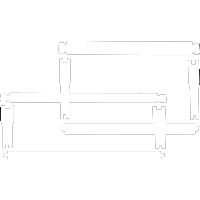
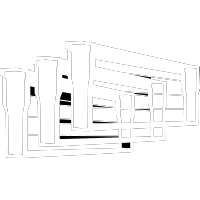
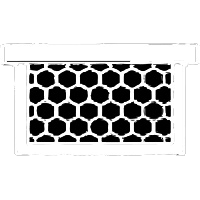
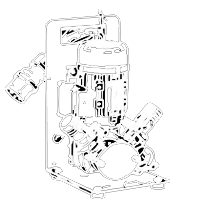
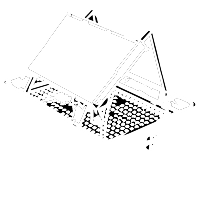
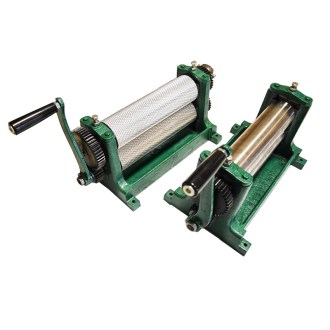
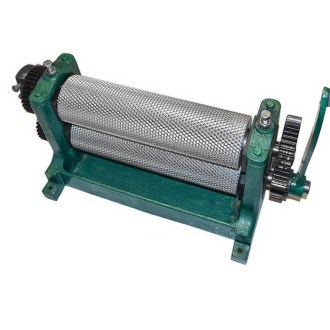
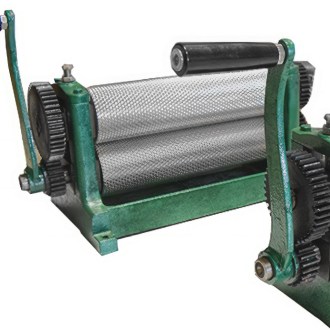
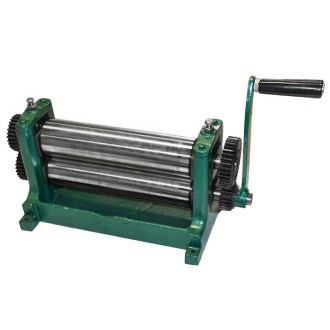
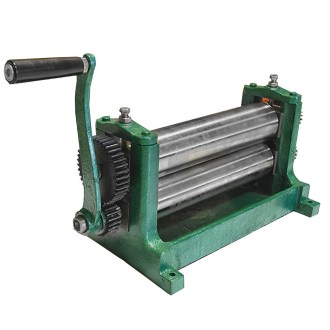
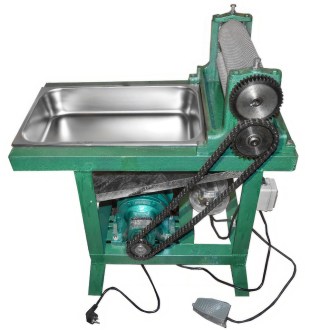
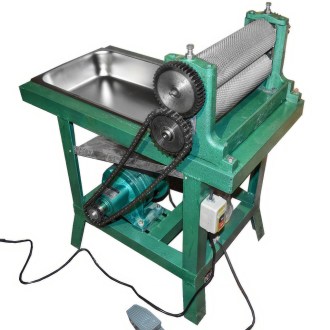
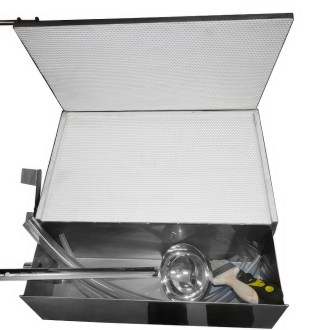
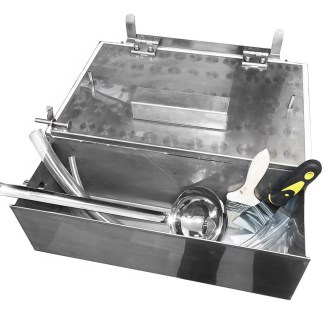
Manual Foundation Presses equipped with smooth or engraved rollers are an ideal choice for small to medium-sized beekeepers who do not want to, or cannot, invest in expensive automatic production lines. The press offers an excellent balance between cost and performance, with the option to add a motor drive later. Achieve a closed cycle of beeswax processing and produce your own high-quality foundation sheets. With manual presses, each sheet must be trimmed to the desired size. It is important to coat the press plates with a solution of mild soap or detergent to prevent the wax from sticking. Pressing plates made from aluminum alloy can be used. Melted wax is poured onto the press, which is then closed with the upper section to form the foundation sheet.



Different Technologies for Foundation Sheet Production
DIY Foundation Production: Step by Step Towards Healthy Colonies
Beekeeping is not only about harvesting honey; it is also about caring for and supporting our bees. One of the key aspects of beekeeping is producing high-quality foundation sheets, which serve as the structural base for comb building inside the hive. This is where various technologies come into play—methods that transform beeswax into precise foundation sheets.
Technologies Used in Foundation Production
Today, several methods exist for producing wax foundations, each with its own benefits and suitability depending on the scale of production.
Wax Rolling
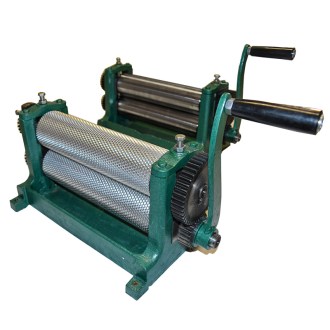
Rolling is a more advanced technology suitable for higher levels of foundation production. This method uses special wax rollers, generally divided into the following types:
Smooth rollers: These rollers allow for manual processing of wax and are ideal for beginners.
Engraved rollers: Rollers with engraved surfaces imprint precise cell patterns on the foundation sheets, ensuring consistent cell size and structure.
Manual or electric drive: You can choose from hand-operated rollers for smaller batches or electric ones designed for efficient, high-volume production.
The use of rollers is recommended for larger beekeeping operations where significant amounts of wax are processed.
Cold-Rolled Foundation Sheets
This technique uses engraved rollers between which a sheet of wax is inserted. The equipment can be powered manually or with a motor. Cold rolling increases productivity for larger volumes and produces foundation sheets known for their excellent flexibility.
In this process, a smooth wax plate is first pressed, then cold-rolled on engraved rollers. Foundations made using this method are more elastic and durable, making handling easier. They perform well under various temperature conditions and allow for more sheets per kilogram of wax.
Hot Method
The hot method involves pouring melted wax onto rotating engraved rollers. These foundation sheets are thicker but tend to be more brittle, making them susceptible to damage during transport and handling. This type is not suitable for colder environments as it loses flexibility at lower temperatures.
Cooled Rollers for Cast Foundations
When cooled rollers are used, a steady stream of wax flows between them, solidifying into the shape of a foundation sheet. This technology is ideal for industrial-scale production requiring high efficiency, although the resulting sheets are somewhat more fragile.
Advantages of Rolled Foundations
Easy to handle and resistant to breaking
Naturally integrated into the hive structure
Young queens begin laying eggs immediately
Fast comb building and quick honey storage
Wax Casting with Silicone Molds
Casting wax into silicone molds is a traditional method offering several key advantages:
Mold material: Silicone molds are flexible, allowing for easy removal of the hardened wax without damaging the foundation sheet. They are an excellent choice for small-scale production.
Cost savings: Producing your own foundation sheets is economical since you avoid buying pre-made ones.
Quality control: The beekeeper maintains full control over the quality of both the wax and the resulting foundation sheets — a crucial factor, especially in organic beekeeping.
This method is ideal for smaller apiaries or beekeepers who occasionally need to produce foundation sheets.
Silicone Foundation Press
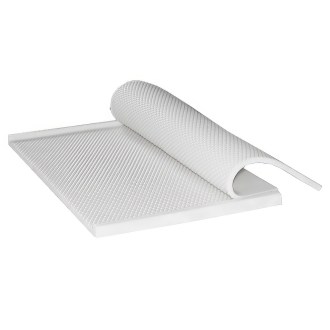
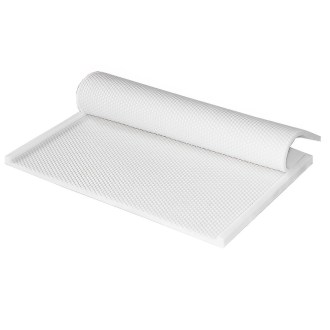
A silicone press represents a traditional production method where liquefied wax is poured between two plates made of quality silicone and pressed together. Once the wax cools, the plates are separated to release the finished foundation sheet. This approach is suitable for small-scale production as it is affordable and requires minimal workspace.
For beekeepers who enjoy a hands-on approach, silicone molds can be purchased or made at home. Although this production method is relatively inexpensive, it is time-consuming — roughly 2 kg of foundation can be produced per hour — making it less suitable for large-scale operations.
Advantages and Limitations of Each Method
Production speed: Rolling is faster than casting but requires more complex equipment.
Investment cost: Although the initial cost of rollers is higher, the investment pays off over time due to savings on pre-made foundations.
Customization: Cell size and pattern can be adjusted to meet the specific needs of the colony.
Casting Foundation Sheets with Silicone Molds: Step by Step
Producing foundation sheets at home from your own beeswax can be a rewarding and enriching experience for any beekeeper.
What You Need for Foundation Production
The starting material is high-quality wax, which can be obtained from old frames or wax residues. These materials are melted, purified, and filtered to produce a clean wax block. The block can be sold or further processed into foundation sheets.
From Process to Detail: Step-by-Step Production
Melting the wax: First, melt the wax at a temperature of about 80–90°C, allowing it to be easily poured into molds.
Preparing the workspace: Place a silicone mat on your workbench to protect the surface from wax spills, and position the silicone mold on top — this will define the cell pattern.
Casting the wax: This step requires some skill. Slowly pour the melted wax into the mold and close it simultaneously. If the result isn’t perfect, don’t worry — hardened wax can be remelted and reused.
Cooling and shaping: Once the wax has cooled and solidified, open the mold and trim the sheet to the desired size using a knife.
Finishing touches: Adjust the finished foundation to fit your frame. Typically, homemade sheets are about 3.5 mm thick, roughly 1 mm thicker than industrially produced ones.
Benefits and Results
Producing your own foundation sheets is a relaxing and rewarding hobby that nurtures creativity. Moreover, the subtle differences between homemade casting and industrial manufacturing often result in higher-quality foundations that benefit your bees. Although the process may take practice, it brings satisfaction and pride in your craftsmanship.