Dadant US Wooden Beehive 12 Frames
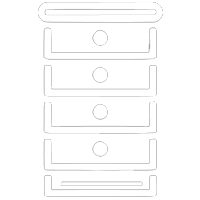
Dadant US beehive accommodates 12 frames sized 482 x 448 x 285 mm (also referred to as Langstroth Jumbo 285, Dadant Modified, or US). The hive is crafted from solid wood panels with a thickness of 22 mm. Stainless steel rails mounted on the inner side walls of the hive body form a smooth, durable support system for frames. The hive's square outer dimensions of 50.9 x 50.9 cm enable both warm-way and cold-way frame arrangement options. The Dadant US system is fully compatible with the 12-frame Dadant Blatt hive, as the only difference lies in the internal frame dimensions (470 x 435 x 300 mm).


Wooden Dadant US beehive with 12 frames: ideal for beekeeping beginners and experts alike
Welcome to the world of trustworthy and efficient beekeeping with our wooden Dadant US beehive. This type of hive is an excellent choice for both beginners and experienced beekeepers who desire a reliable solution for expanding their apiary. Inspired by the innovative designs introduced by Brother Adam, Dadant US hives offer practicality, versatility, and durable construction, perfect for effectively managing your bee colonies.
Characteristics and hive specifications
The Dadant US beehive is designed to accommodate exactly 12 frames measuring 482 x 448 x 285 mm (Langstroth Jumbo 285). Each hive is carefully constructed from premium quality solid timber, measuring 22 mm in thickness, ensuring excellent strength and longevity. The inner side walls feature smooth stainless steel rails ("schienen"), creating secure and stable supports for frame placement while enhancing hive durability.
The square external dimension of 50.9 x 50.9 cm allows for both cold-way and warm-way orientation of frames, providing universal adaptability for all styles of beekeeping management. Compatibility with Dadant Blatt hives ensures maximum flexibility, despite slight differences in interior frame dimensions.
Customization and protective treatments
Did you know that the Dadant hive’s wood is delivered in a natural, untreated state? Therefore, it is highly recommended that after installation of your bee colony, suitable hive coatings are applied. We strongly suggest applying up to three coats of paint or natural varnish, lightly sanding the surface between each layer for optimal weather protection. Applying an additional layer of linseed oil creates extra weather resistance, significantly extending the hive’s service life.
Advice for hive maintenance and care
Following the colonization of the hive by bees, the specific indoor climate generated by their activity may result in condensation, especially under the lid. Such moisture could lead to mold growth. To prevent this, sufficient ventilation should be ensured by placing the hive on elevated hive bottoms or stands.
Moreover, thanks to its large brood chamber design, this hive is particularly useful for strong bee colonies, reducing swarm risk significantly. Dadant US hives thrive especially well in regions characterized by abundant floral resources, leading directly to high yields of exceptional quality honey.
Our Dadant US hive combines superior strength and thoughtful design, making it a first-class solution for successful beekeeping. Its robust construction and innovative features offer the ideal housing for protecting and maintaining bees. We are your trusted partners in your beekeeping adventures—visit us and see how our premium hives can support your beekeeping journey and goals!
A brief history of modern beekeeping and hive development
Early steps in beekeeping tradition
The history of beekeeping stretches back thousands of years. Initially, early beekeepers did not breed bees but rather collected wild honey, often destroying the hives and colonies in the process. However, as far back as Ancient Egypt, the walls of pharaohs’ tombs depicted scenes showing Egyptians already managing bees by using smoke to calm bees during honey harvest.
In the 4th century BCE, Chinese philosopher Fan Li advocated for wooden hive designs, while the first artificial straw beehives appeared around two millennia ago. Unfortunately, these hives were typically ruined during honey extraction, frequently leading to the loss of entire colonies.
Revolutionary developments in hive design
Remarkable improvements to hive designs occurred in the 18th century when Anton Jamša from today’s Slovenia created stackable and portable designs. Shortly after, Thomas Wildman introduced beehive concepts with removable top bars. However, at that time, these creations gained limited acceptance.
Discovery of the critical "bee space"
A critical leap forward occurred in the mid-19th century with Lorenzo Langstroth’s discovery. He recognized a specific dimension (precisely 3/8 inch, termed the "bee space") as the optimal gap, within which bees would neither build comb nor pack propolis. Langstroth’s discovery enabled the creation of hives utilizing removable, movable frames, significantly revolutionizing hive technology and hive management.
Hive standardization and further innovations
Later on, efforts by institutions such as the British Beekeepers' Association standardized frame dimensions. However, hive sizes themselves continued evolving. Among the strongest advocates for practical hive configuration were Dadant and Brother Adam, who promoted hive designs accommodating approximately 11–12 frames.
Modernization and development of contemporary beekeeping
Since the mid-19th century, inventions like honey centrifuges (extractors) have greatly improved beekeeping efficiency and honey harvest productivity. Hives have consistently evolved since then and continue as important tools for globally thriving beekeepers. Langstroth’s classic hive style remains predominantly popular worldwide.
Dadant US wooden hive design with 12 frames
Today's modern Dadant hive retains popularity due to its increased capacity and efficient space utilization. Wooden Dadant hives provide optimal convenience and ease of use, satisfying traditional preferences in a contemporary design. Offering ample expanse for 12 frames, it guarantees sufficient room for the sound development and sustainability of bee colonies.
With innovative technologies and standardization continuing to shape beekeeping, the tradition remains strong, opening new avenues and possibilities for apiculturists across the world.