









Apiguard - 1 packet - 10 pieces
 In stock
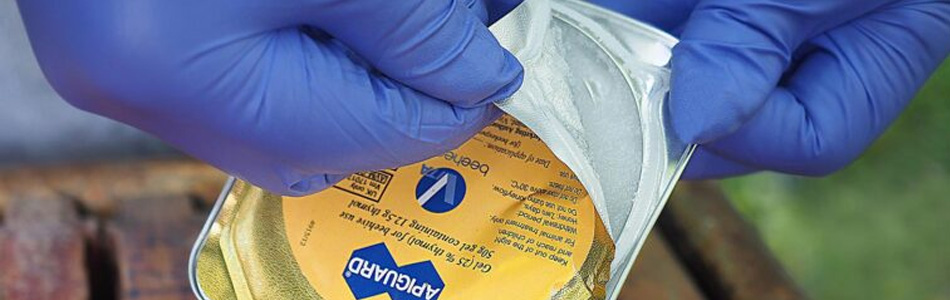
APIGUARD gel (25% thymol) for application in the beehive. 10 evaporation trays in a package for 5 bee colonies.

Apiguard: Natural and Effective Treatment of Honey Bee Colonies Against Varroa Mite and Chalkbrood
Every beekeeper knows that healthy bees are the foundation of a strong colony, good overwintering, and a rich honey flow. Apiguard is a practical veterinary product based on natural thymol that offers a gentle yet effective solution for treating honey bee colonies. It helps control dangerous parasites and supports a clean hive environment without the use of synthetic pyrethroids. When used according to the instructions, it leaves no undesirable residues in honey or beeswax.
What Is Apiguard and How Does It Work?
Apiguard is a patented slow-release gel containing the active ingredient – thymol. Thymol is a natural substance found in the essential oils of certain plants, such as thyme, and it also occurs naturally in small amounts in honey. Thanks to its gel consistency, the active ingredient is not released all at once but gradually, thus causing less disruption to the normal activity of the colony.
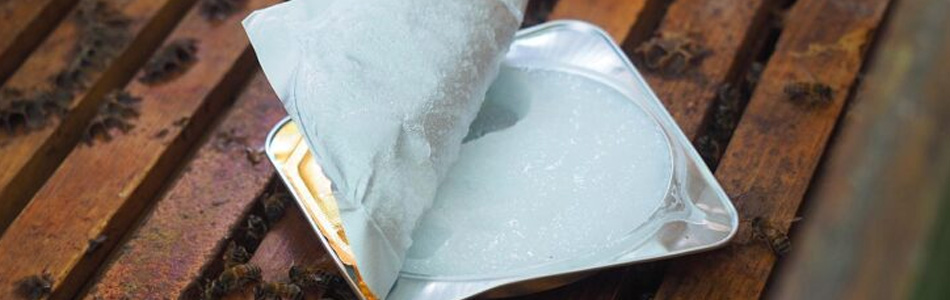
Once the tray is opened, the thymol begins to evaporate from the gel. At the same time, the bees react to the gel as a foreign material in the hive and attempt to remove it. Upon contact, Apiguard adheres to the fine body hairs of the worker bees, which then distribute it between the frames and throughout the entire hive space. The effect therefore continues even when no gel appears to remain in the tray.
Key Benefits for Beekeepers: Why Choose Apiguard?
1. Broad spectrum of action: Apiguard is effective against the Varroa destructor mite, against the tracheal mite (Acarapis woodi), and also helps in cases of the fungus Ascosphaera apis, which causes chalkbrood disease in bee brood.
2. Effective even where pyrethroid resistance exists: The product is also suitable where reduced sensitivity or resistance to commonly used pyrethroids has been detected in Varroa mites.
3. Gentle on the hive and bee products: When used correctly, Apiguard is safe for bees, brood, and comb. The withdrawal period is 0 days, so it poses no risk of residues in honey or beeswax.
4. Simple application: The tray system is quick, clean, and requires no complicated preparation or special equipment.
Instructions for Use and Suitable Conditions
Treatment is best started in summer after the last honey harvest, i.e., after the end of the main honey flow. The ideal period is when the average daily temperature is above 15 °C. In warmer weather, the bees are more active and distribute the gel more effectively throughout the hive. Apply Apiguard preferably in the evening or after sunset so that the colony can gradually adjust to the thymol vapours as the temperature drops.
Step-by-step application procedure:
1. Place the opened tray directly on top of the brood frames with the open side facing up. Do not completely remove the aluminium lid, as some gel may remain on it. Check that the worker bees have good access to the tray; if necessary, create space by inserting an empty super or a feeder.
2. Inspect the colony after 10 days. If the tray is empty, replace it immediately with a new one. If gel still remains, leave the tray in the hive until day 14 and only then insert the second tray.
3. Leave the second tray in place for a further 2 to 4 weeks. The total treatment period therefore usually lasts 4 to 6 weeks.
Note: For weaker colonies, it is advisable to reduce the dose to 25 g of gel so that the bees are not unnecessarily stressed by the intensity of the vapours. When applying at higher temperatures above 25 °C, also use a smaller dose and keep the hive floor closed so that the heavier thymol vapours do not escape too quickly.

Practical Tips and Frequently Asked Questions
Bee behaviour after application: After the product is applied, the colony may be temporarily more restless. Bees may, for example, beard or form clusters in front of the hive entrance. This is a normal, mild, and temporary reaction to the strong scent of thymol. The characteristic odour may also be noticeable around the hive during treatment.
Combining with feeding: If you plan to feed the colony, insert the Apiguard a few days earlier so that the active ingredient has time to start working before intensive feed intake begins.
Use with multiple brood boxes: Apiguard can also be used with colonies managed on one-and-a-half or two brood boxes. With a larger hive volume, the efficacy may be slightly lower. In such cases, place the tray on the frames in the lower brood box.
When not to use Apiguard: Do not apply the product during the honey flow or when honey supers intended for consumable honey are on the hive, to avoid affecting the natural aroma and taste of the honey. Also do not treat during prolonged periods when temperatures are below 15 °C, as the gel evaporates too slowly.

Table of Key Product Parameters
| Active ingredient | Thymol, a natural substance of plant origin |
| Indication | Varroa mite, tracheal mite, chalkbrood disease of bee brood |
| Withdrawal period | 0 days, safe for honey and beeswax when used according to instructions |
| Ideal application temperature | > 15 °C, preferably applied in the evening hours |
| Total treatment duration | 4 to 6 weeks, two consecutive tray applications |
| Storage conditions | Below 30 °C, protect from direct sunlight |