Refractometers
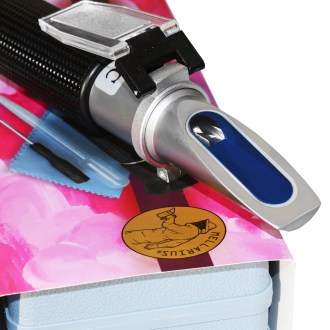
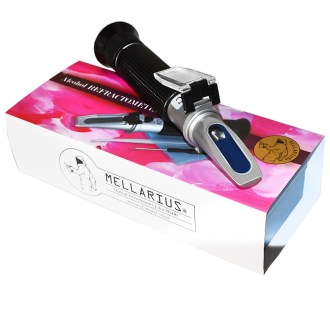
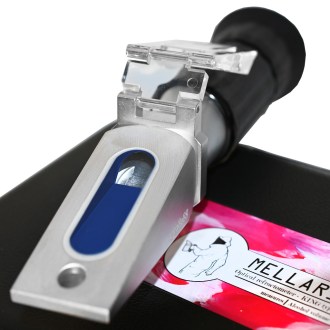
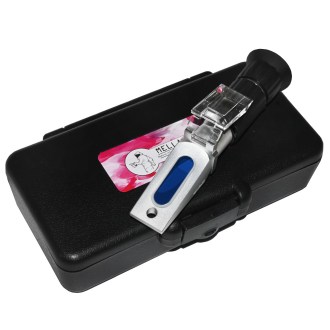
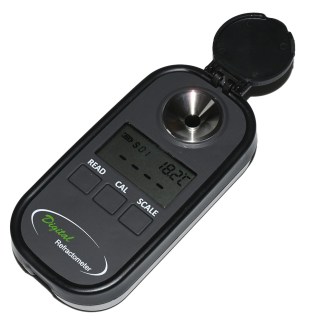
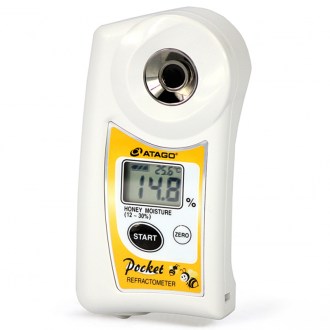
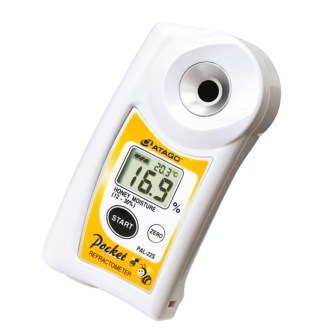
Refractometer is used to measure the properties of liquids by means of light refraction. There are different types of refractometers made from various materials and equipped with specialized scales. The measurement process is simple — place a drop of liquid on the slanted glass prism and look through the eyepiece, where you will see a scale showing the boundary between two colors. In the eyepiece, you’ll notice a blue-white interface dividing the scale, from which the reading is taken. The measured values may include, for example, sugar content or the water percentage in honey. Digital refractometers display the measured value directly on the screen.


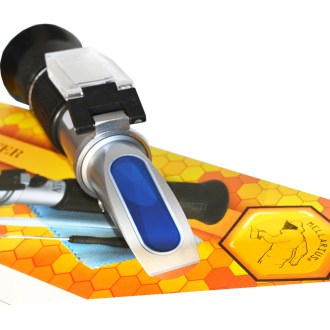
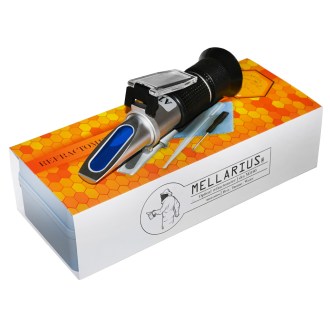
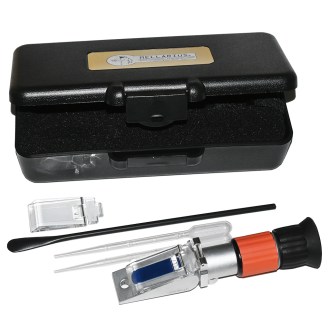
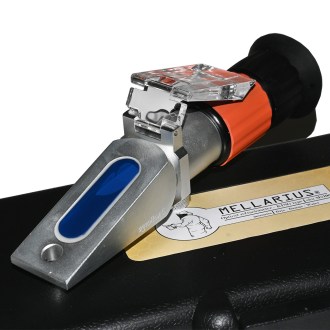
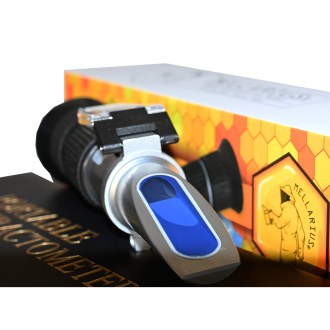
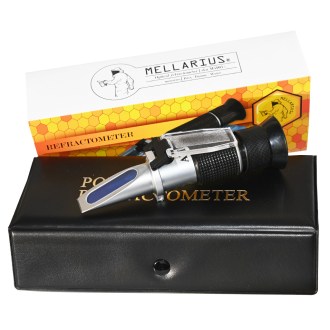
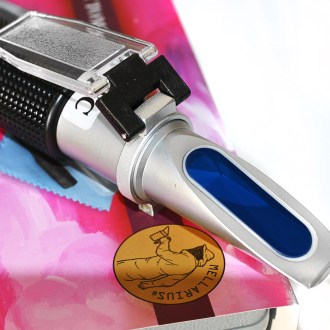
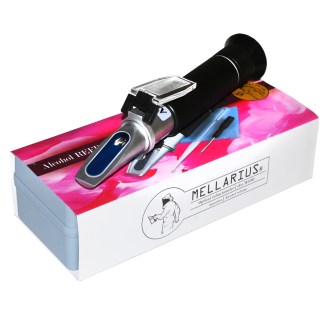
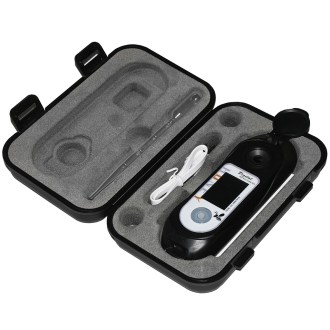
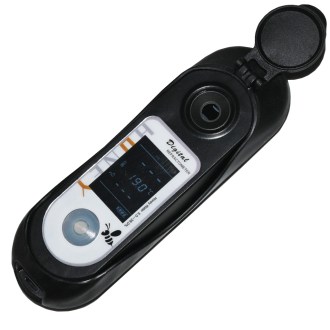
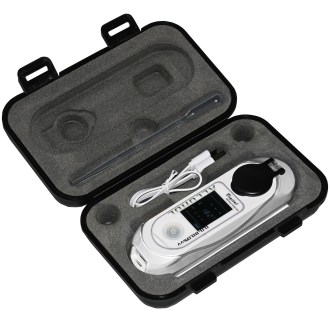
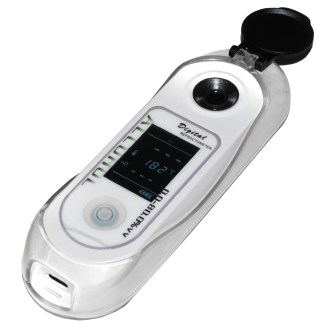
Refractometers in Modern Beekeeping for Ensuring the Highest Honey Quality
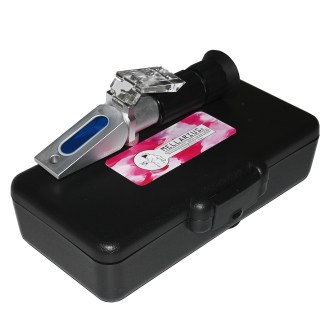
Beekeeping today combines natural processes with advanced technology to deliver honey of the highest quality. A key instrument in this process is the refractometer. These devices, specifically designed for beekeepers, are used to accurately measure the water and sugar content in honey.
Features of Modern Refractometers
Precision Measurement and Quality Control: Refractometers help ensure that honey meets required standards, which is crucial for its long shelf life. Accurate control of water content is essential, as increased moisture can lead to fermentation, negatively affecting both durability and quality.
User-Friendly Design: Our refractometers, whether analog or digital, are built for easy operation. Just a few simple steps provide precise results to help you efficiently manage honey production.
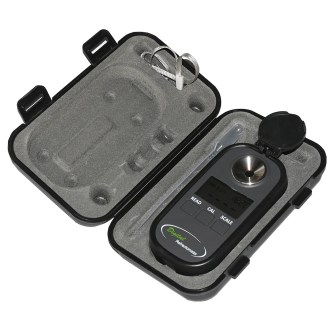
Advanced Technology: Digital models offer greater accuracy and faster readings, making them ideal for professional beekeepers aiming to maintain the highest product standards.
Practical Use of Refractometers
-
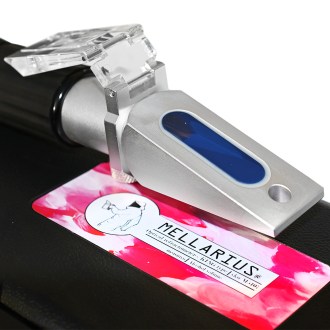
Sample Preparation and Application: Keep both the refractometer and honey close to 20°C. Stir the honey to ensure uniformity. Apply a small amount to the blue prism surface, taking care not to scratch it with sharp objects.
-
Measurement: After applying the sample, close the cover and observe where the dividing line intersects the scale. Read the water content percentage on the right side of the scale.
-
Cleaning: After measuring, thoroughly clean the prism and cover with lukewarm water to prevent damage caused by honey residues.
Calibration of the Refractometer
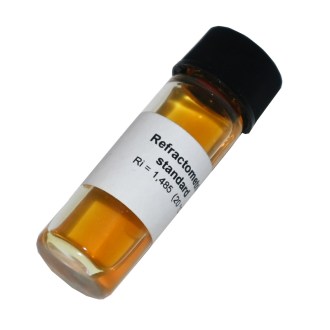
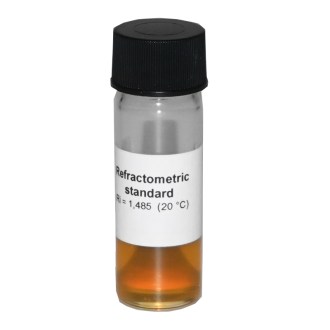
Although many refractometers feature automatic temperature compensation (ATC) and rarely require calibration, it can be performed if needed. Place calibration solution on the blue prism and compare it with the reference value (Brix 78.8). If necessary, adjust the reading using the calibration screw.
Benefits of Using Refractometers
Accurate Water Content Control: Refractometers ensure honey does not contain excessive moisture, preserving its stability and quality.
Illuminated Models: Bright optics allow for use even in low-light conditions, making fieldwork easier.
Portability: Compact design ensures refractometers are easy to transport and suitable for both field and workshop use.
Refractometers are essential tools for beekeepers focused on honey quality and longevity. Thanks to their advanced technology and ease of use, monitoring sugar concentration and water content in honey is straightforward and precise. For both professional and hobbyist beekeepers, refractometers provide the opportunity to achieve better results and optimize honey production.
Basics of Refractometry: Why Is the Refractive Index So Important?
Beekeepers aiming to harvest top-quality honey and other products need a solid understanding of various physical processes. One of the key tools in achieving this is the refractometer — a device that measures the refractive index, essential for determining honey quality and moisture.
What Is the Refractive Index?
The refractive index is a fundamental optical quantity that determines how light travels through different media. Beekeepers use refractometers to measure water content in honey — a crucial factor in preventing fermentation and preserving quality. The refractive index can be absolute — comparing the speed of light in a vacuum and a substance — or relative, comparing light speed between two substances.
Influence of Wavelength and Temperature
The refractive index is not constant; it changes with both the light’s wavelength and temperature. In beekeeping practice, maintaining stable mixing conditions is important for consistent results, while environmental variations, especially in gases, can cause greater deviations.
Geometrical Optics and Refractometers
Several fundamental laws of geometrical optics are essential for refractometry: the straight propagation of light, independence of light rays, ray reversibility, and the laws of reflection and refraction — particularly Snell’s law.
Snell’s law, central to understanding how light bends when passing through substances with different densities, explains how refractometers detect sugar concentrations in honey.
Fermat’s Principle and Light Spectrum
In practice, Fermat’s principle can be applied to optimize analysis of the light path within the refractometer. It allows for the observation of light passing through different layers of honey. Additionally, light spectra — divided according to shape and wavelength — help determine honey’s properties.
Refractometry is vital in beekeeping and honey production because it allows beekeepers to monitor and control the quality of their products.
Handheld Refractometer
A handheld refractometer, similar to a dip-type model, is easy to use and does not require complex temperature adjustment when operated between 15–38°C. The optimal working temperature is around 20°C for maximum accuracy. For correct measurement, begin by calibrating with distilled water, then apply the honey sample. This type of device is widely used in:
Automotive industry: Testing brake fluids and battery electrolytes.
Food industry: Measuring sugar levels in wine and honey.
Healthcare: Analyzing bodily fluids.
Laboratories and manufacturing: Precise measurement of various solutions.
Handheld refractometers, available in both analog and digital versions, come with different accuracy levels for a wide range of applications.
Different Refractometer Scales
Refractometers can be calibrated with various scales, the most common being:
Brix: Measures sugar concentration, widely used in the food industry.
Baumé: Used for determining liquid density, particularly in sugar production.
Oeschle: Used in winemaking to assess the must density.
These scales allow for specific measurements depending on the field of application.
Comparison of Analog and Digital Refractometers
Digital refractometers offer analytical precision and can be connected to a computer for data recording, providing excellent reliability and ease of use. While analog models require stable temperature and pressure conditions, digital variants include temperature compensation and the ability to switch between different measurement scales for versatile use.