Nails
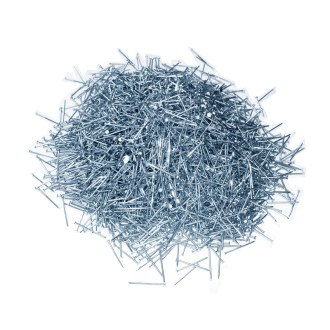
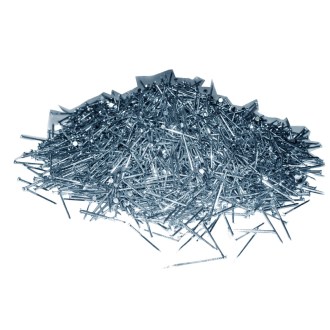
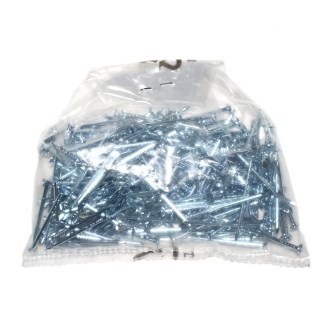
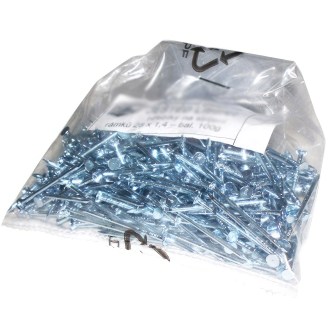
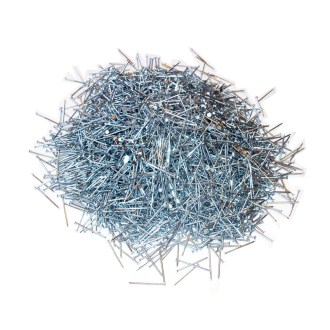
In our selection, you will find beekeeping nails available in various types, essential for assembling beekeeping frames. For this purpose, we offer reliable nails in the size of 28x1.4 mm, though other sizes are also available. We also recommend using a frame jig, which allows you to easily insert the side bars and secure the top bar using two nails for each joint. Afterward, you can remove the frame from the jig, rotate it, and attach the bottom bar underneath the protruding edge of the jig. To increase durability during honey extraction, you may add an extra nail under the top bar from the side of the frame. When working, leave the nails slightly untapped on one side—this makes it easier to fasten the frame wire. These nails have been proven by years of practice and are highly popular among beekeepers.
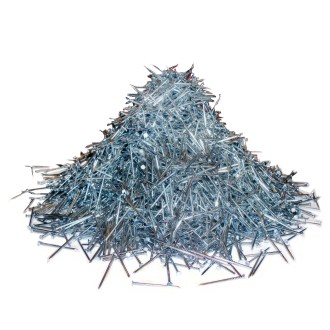


Nails for Beekeepers
Explore our range of carefully selected nails, perfectly suited for all kinds of beekeeping projects.
28 x 1.4 mm Nails – the Perfect Choice for Frames
Reliable equipment is essential for successful beekeeping. Our 28 x 1.4 mm nails have been chosen based on the extensive experience of beekeepers. This size is ideal for assembling both the top and bottom bars of hive frames, ensuring strength and stability.
Each package contains 1 kg of these nails, giving you a sufficient supply for your beekeeping season.
Application and Manufacturing Technology of Nails
Nails are fundamental fastening components made mainly from steel, with options available in copper, brass, or aluminum alloys as well. They feature a pointed end and a widened head for easy securing of materials.
In beekeeping, nails are a critical component in the construction of hives and frames, providing quick and solid connections of wooden parts. They can be driven into wood using a hammer or fitted with electric or pneumatic tools known as nail guns.
Quality and Variety of Nails for Different Purposes
Our nail selection meets stringent quality standards and is suitable for various construction projects. There are also nails specifically designed for other applications such as pallet assembly, concrete nailing, or use in metalworking.
Galvanized or stainless steel nails are resistant to corrosion, making them ideal for outdoor use or humid environments, such as hive construction.
A Bit of History – Medieval Nails
Medieval nails were not only practical but also artisanal wares. Art from the era depicts various nail forms. These nails were used for joining, fastening, and sometimes decorative purposes. Their heads and shafts varied greatly in shape, thanks to handcrafted production methods.
Nails can be divided into types with or without heads, the latter historically referred to as pins. Headed nails were often used to fasten materials like leather and metal, while headless variants found use in blacksmithing, such as attaching horseshoes.
Nails as Archaeological Artifacts
Finds of ancient nails offer a fascinating glimpse into the past. Discussion around these artifacts has revealed that even ordinary nails have a complex history and can be valuable collector’s items. From different cross-sections to specific manufacturing techniques, each piece carries its own uniqueness.
Photos of these finds often showcase nails with various shapes and functions, such as offset shafts or massive heads that provided decorative flair to medieval structures. These phenomena illustrate not only the nails themselves but also the era they belonged to.
The Legacy of Nails Through Time
Despite technological advancements and the development of new materials, nails have remained an irreplaceable part of construction. Their evolution from medieval times to the present day highlights the importance of these tools—not only in historical contexts but also in modern applications, especially within specialized fields like beekeeping.
Tips for Assembling Frames:
For many beekeepers, a simple wooden jig is essential. Its construction is straightforward: a box without a bottom or lid, where you set the side bars and secure them from above using the top bar. This jig can be enhanced by drilling holes for wiring—these can be made using a sturdy template, like sheet metal. Adding removable pins on the sides makes it easy to extract finished frames.
Stapler Option
If you prefer a more modern approach, you can take inspiration from the technique using an automatic or pneumatic stapler. As discussed on beekeeping forums, this method enables fast and strong assembly of components, which is key for the durability of frames during hive handling.
Tips for Speeding Up the Process
For those who need to produce larger quantities of frames, there are industrial solutions similar to production lines in wood processing. Even adapting smaller machines for home use can greatly reduce the time needed for assembling frames.
Making beehive frames doesn't have to be time-consuming or tedious. By choosing suitable tools and techniques, the process can become fast and efficient—leaving you more time for the most important part, taking care of your bees. Whether you lean toward traditional nailing or modern stapling, the key is to find the method that best suits your needs and the number of frames you plan to make.