





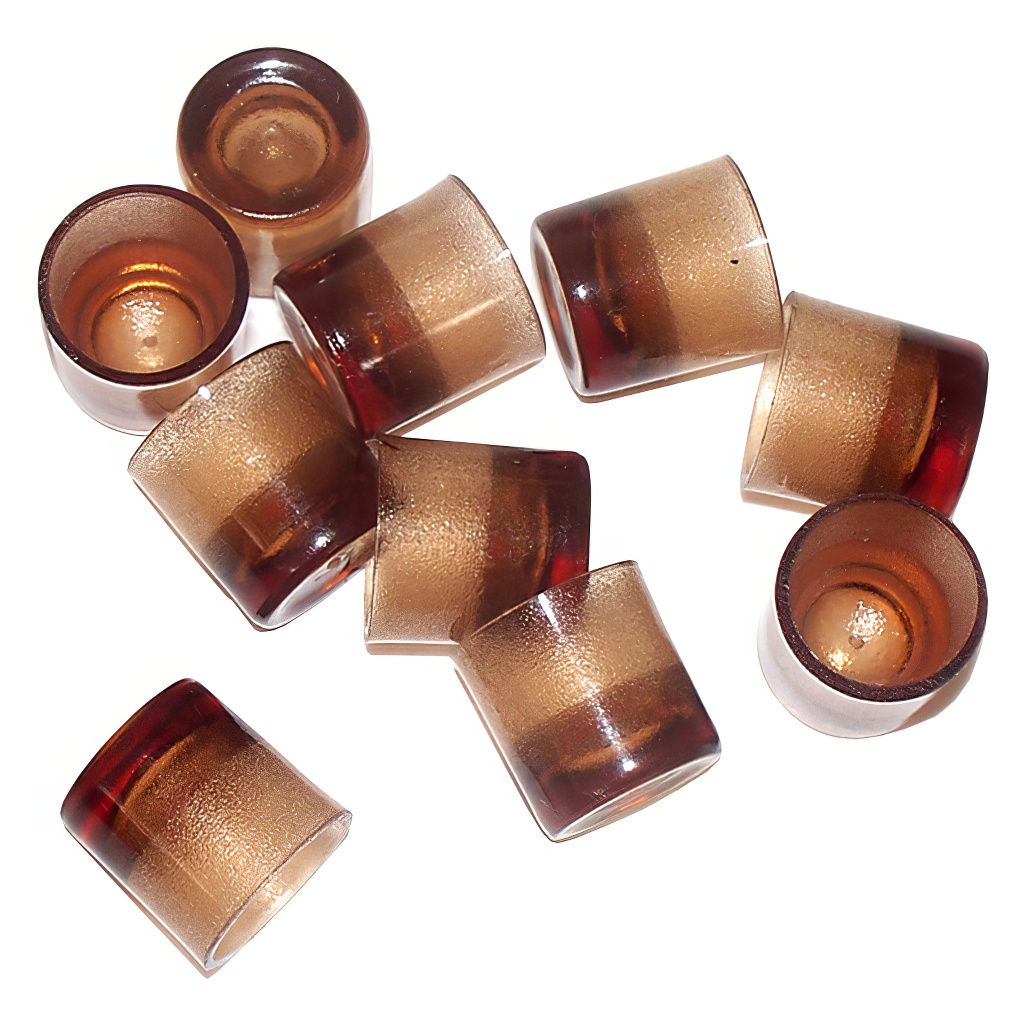
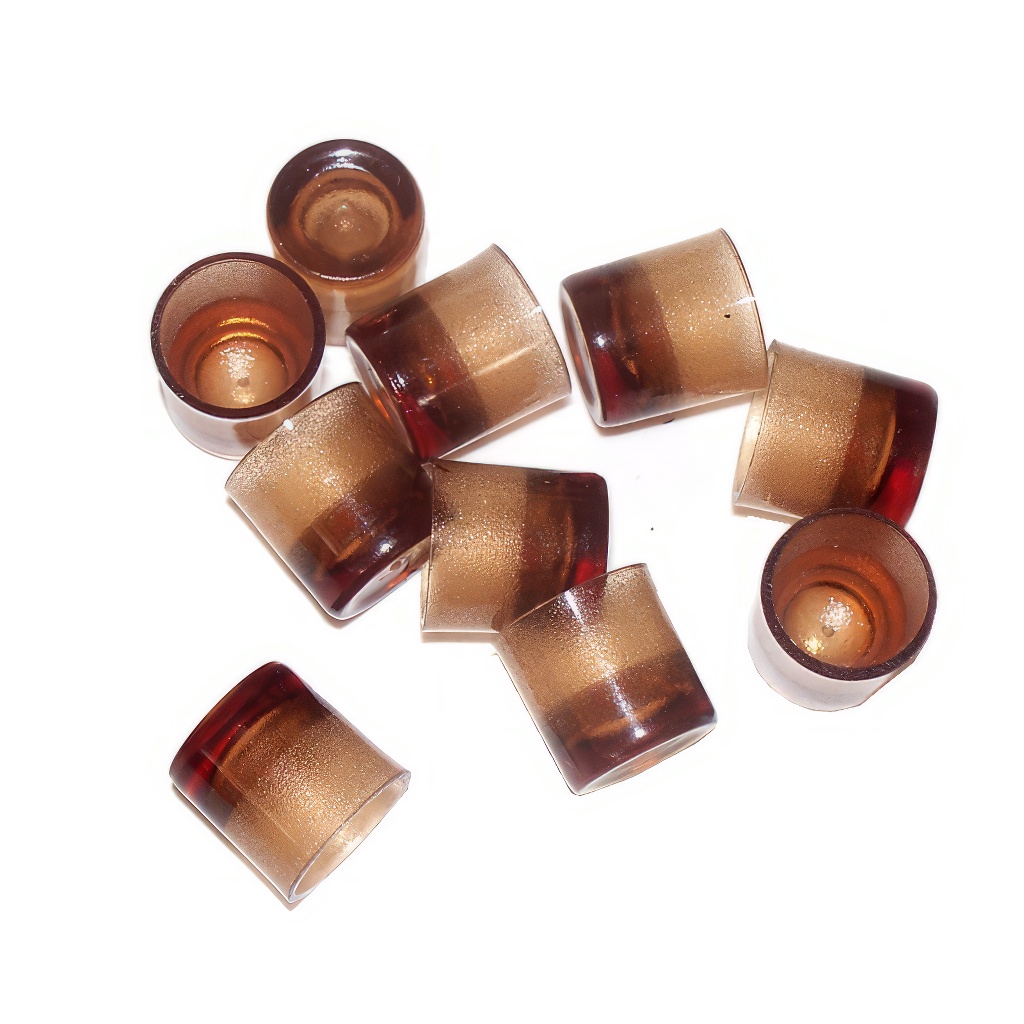
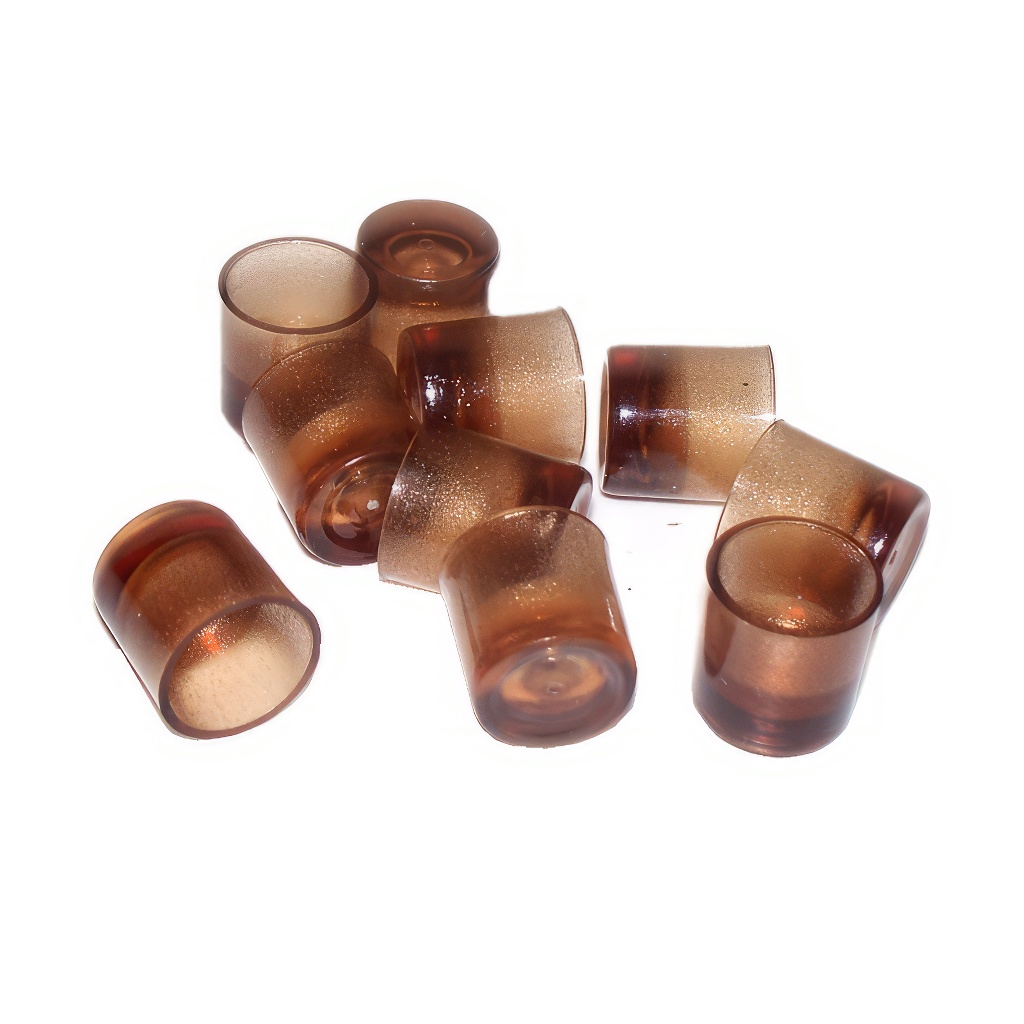
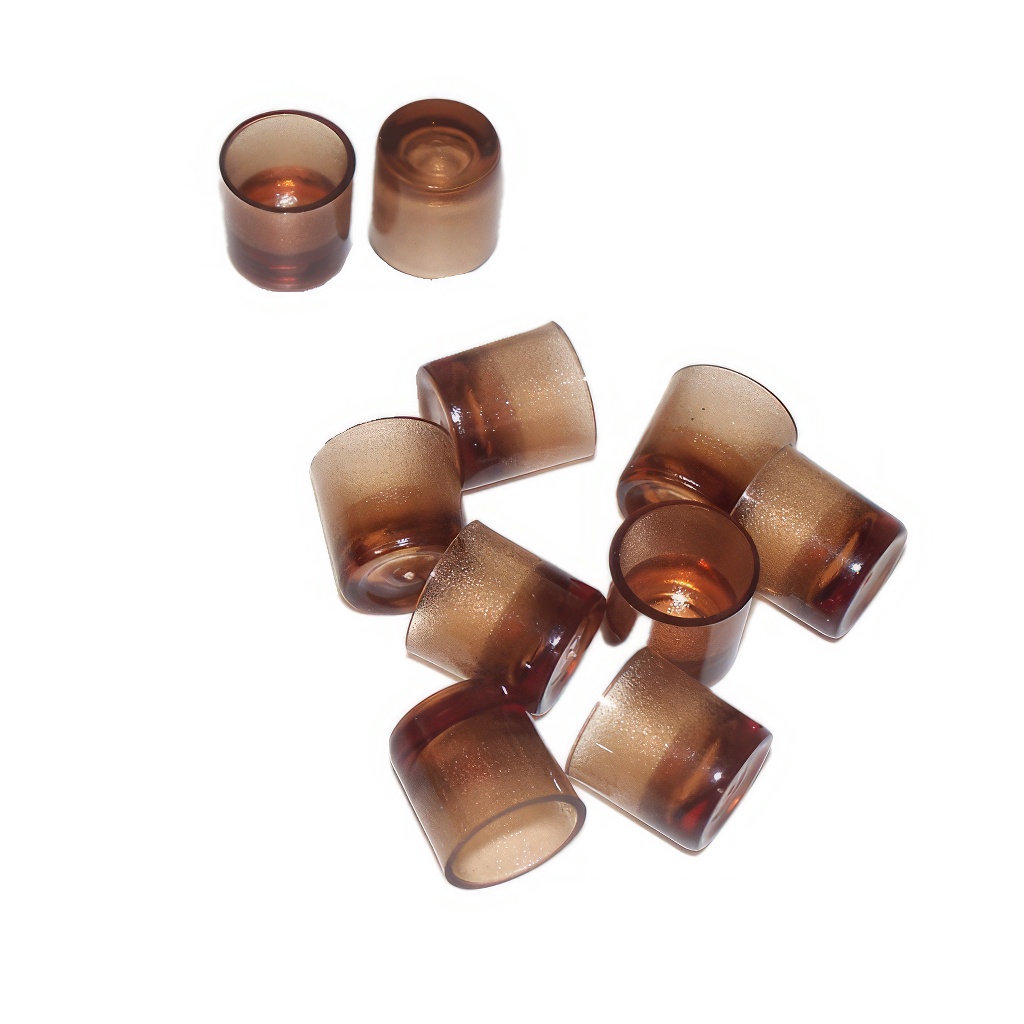
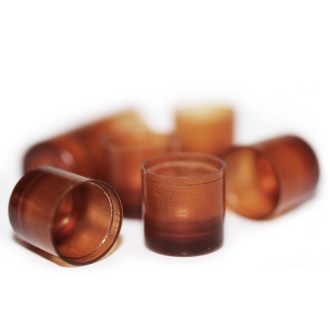
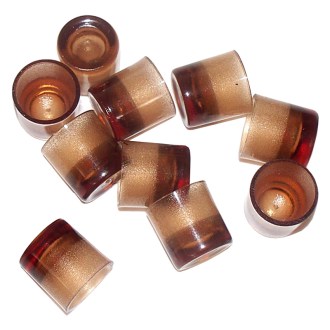
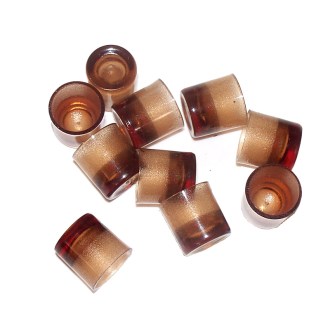
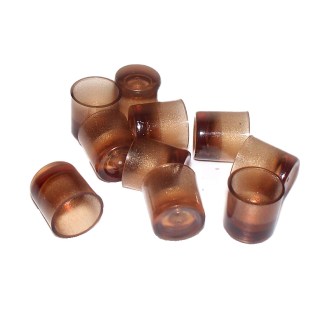
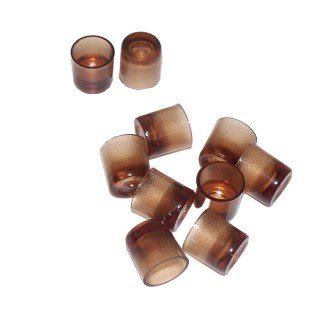
Cell starter cups 10 pcs
 In stock
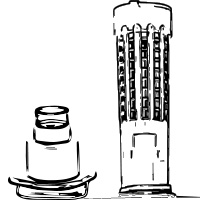
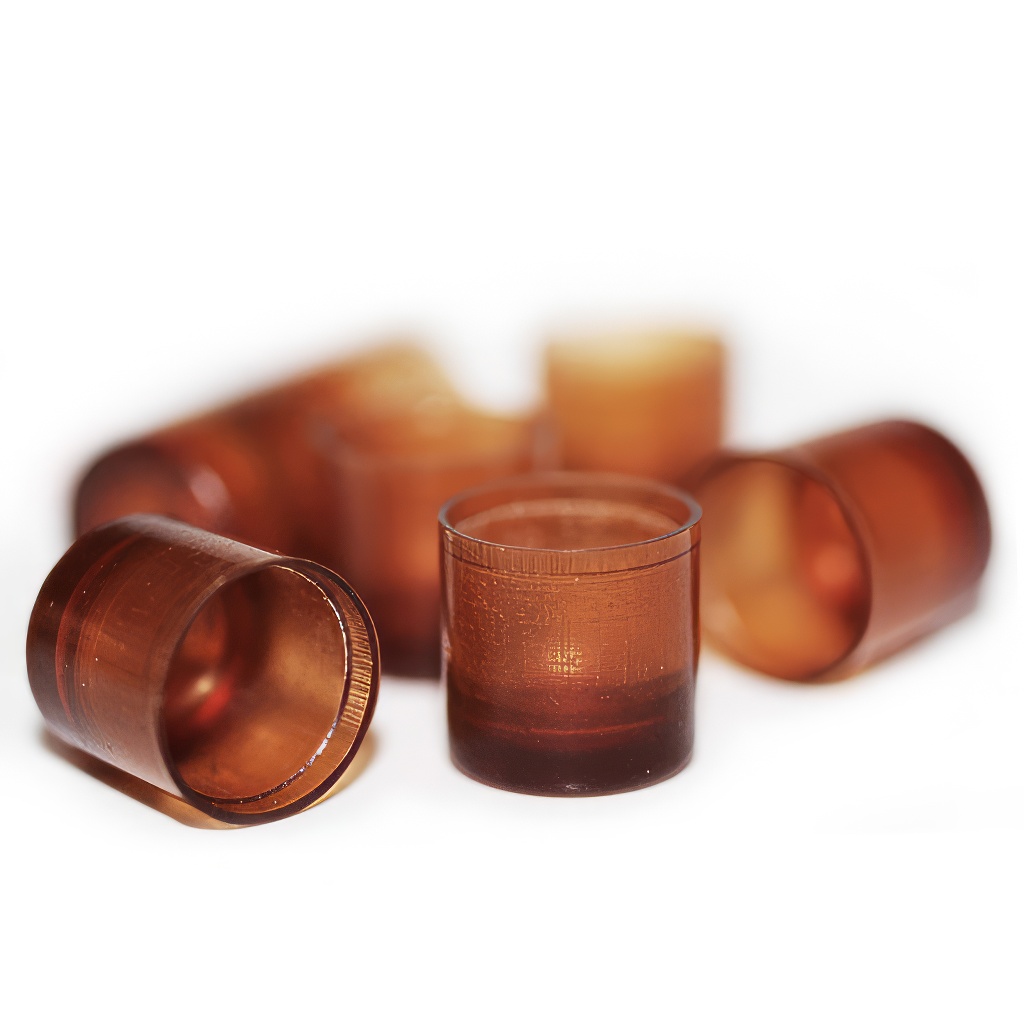
These brown cell cups are inserted into the back of the comb box. The queen lays
an egg in the bottom of each starter cup which is then inserted into a cell cup
holder.

Queen Cell Cups for Queen Rearing – Set of 10 pcs
A quality queen bee is the foundation of a strong, calm, and productive colony. These queen cell cups are a proven tool for controlled queen rearing, used by beekeepers around the world. They are suitable for both beginner breeders and experienced beekeepers – they speed up work, make the entire process clearer, and help increase acceptance rates without unnecessarily risking damage to sensitive brood.
Better Acceptance Thanks to Roughened Inner Surface
During queen rearing, it sometimes happens that bees carefully clean the cup but subsequently do not accept the larva. These queen cell cups have a roughened inner surface that mimics the structure of beeswax and appears more natural to worker bees. Thanks to this, they usually accept them more willingly and quickly. At the same time, the lengthy "settling in" of smooth plastic cups in the hive, which is often necessary with standard variants, is eliminated.
Modular System: Rearing Without Grafting
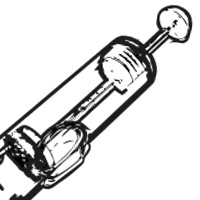
A great advantage of this system is the possibility of queen rearing without manual grafting. The cup is simply attached to molded plastic cells of the breeding cassette (frame for egg laying). The queen thus lays an egg directly into the prepared cup. Once the larva is at the ideal age, you can easily remove the cup from the back of the cassette and insert it directly into the queen cell cup holder on the breeding bar.
This procedure practically eliminates manipulation of the fragile larva – you minimize the risk of damage, chilling, and stress. The cups, holders, and other parts are fully compatible with each other and form a well-thought-out system that helps achieve stable results in rearing.
Also Suitable for Classic Manual Grafting
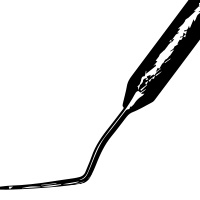
Although the cups are primarily designed for use in a breeding cassette, they can be used without problems independently for traditional manual grafting using a grafting tool. They are ideal for larvae aged approximately 6–24 hours, which is the commonly recommended age for starting the rearing of vital queens.
Why Choose These Queen Cell Cups?
You get more practical and comfortable work, time savings, and a smoother course of the entire rearing process. The unified shape facilitates handling, the systematic solution simplifies the organization of rearing, and the roughened surface supports acceptance. The result is usually more successfully reared and capped queen cells. This is a widespread and proven solution that helps bring queen rearing to a modern and efficient level.

Technical Parameters
| Number of pieces per package | 10 pcs |
| Material | Durable plastic with food-grade certification |
| Surface treatment | Roughened inner surface (wax imitation) |
| Outer diameter of cup | 10 mm |
| Inner diameter of cup | 8 mm |
| Cup height | 10 mm |
| Method of use | Systematic rearing from egg (without grafting) and classic manual grafting |
| Compatibility | Fully compatible with breeding cassette and system holders |
| Recommended larva age | 6–24 hours |
Tip for beekeepers: When using for the first time, you can lightly coat the cups with honey, weak sugar solution, or place them in the honey super for 24 hours so they take on the hive scent. Thanks to the roughened inner surface, this is often not necessary, but this simple step can further accelerate acceptance and subsequent queen cell construction.
Professional Grafting System for Easier Queen Bee Rearing
Rearing your own queen bees is a path for beekeepers to greater self-sufficiency, better genetic control, and long-term stable colony productivity. This well-designed grafting system significantly simplifies the entire procedure and makes queen rearing more accessible even to less experienced breeders. It allows you to obtain healthy, vital queens without lengthy and delicate manual work with larvae.
Why Choose This System
Without manual grafting: The work with grafting tools and transferring tiny larvae from comb is eliminated. This is especially appreciated by beekeepers with weaker eyesight or less steady hands – the work is faster, more precise, and gentler on breeding material.
Uniform larva age under control: You don't have to laboriously select "correct" larvae and estimate their age. Thanks to the precisely known time of egg laying by the breeder queen, you get larvae of the same age, which positively affects the quality of future queens.
Gentle and safe handling: Larvae remain in the original plastic cups and only the cups are transferred during work. This minimizes the risk of damage, drying out, or chilling during handling.
Technical Parameters of the Assembly
| Assembly Component | Dimensions and Specifications |
| Queen cell cup | outer diameter 10 mm, height 10 mm, inner diameter 8 mm |
| Queen cup holder | ivory color, diameter 12/17/22 mm, height 18 mm |
| Base holder | base plate dimensions 26 × 22 mm, height 12 mm |
| Incubation cages | compatible with queen cup holder, 10 pcs per package |
| Egg-laying frame | number of cells 110, outer dimensions 130 × 147 mm, thickness including cover 30 mm |
Step-by-Step Queen Rearing Guide
1. Preparation of breeding frame: Place the plastic frame with inserted cups (110 pcs) into a standard wooden frame. You can cut a hole in built comb and screw the frame to the top bar, incorporate it into the midrib during wiring, or temporarily attach it to the comb with rubber bands or string. Bees will soon firmly attach the frame themselves and naturally integrate it into the comb.
2. "Polishing" by bees: Place the prepared frame (including the transparent cover with queen excluder) into the colony for 2–3 days. Bees will coat the plastic with a thin layer of wax and propolis, thereby naturally treating it, scenting it, and accepting it better.
3. Isolation of breeder queen: Lightly coat the queen with honey from the queen excluder side. Find the breeder queen in the selected gentle and productive colony, place her through the front opening into the plastic frame and close it. The queen cannot pass through the narrow gaps, but workers can pass through, be in contact with her, and continuously feed her.
4. Egg-laying check: Place the frame in the center of the brood nest between combs with open brood. The queen usually lays eggs in the frame area within 2–4 hours. The next day, check that the eggs are at the bottom of the cells. If everything is fine, remove the front cover, release the queen, and return the frame so that bees continue to warm the laid eggs.
5. Larva check: On the fourth day, remove the frame, gently brush off the bees, and verify that the larvae have hatched (after approximately 72 hours, they lie at the bottom of the cell in a slight arc). A subtle sheen around the larva against the light indicates that it is already in royal jelly and is being fed.
6. Assembly of grafting bar: On a warm day (or in a warm room), remove the back cover. Remove the plastic cups with larvae and insert them into the yellow holders. Then snap them into the base holders that you have previously attached to the grafting bars at a spacing of 28–40 mm.
7. Insertion into breeding colony: Transfer the breeding frame to a prepared queenless colony or to a honey super separated from the brood nest by a solid partition. Ideal is insertion 30–60 minutes after queenlessness, so that bees do not start building emergency queen cells from their own brood. Place the frame in the center of the brood body, where there is the most suitable temperature, humidity, and enough young nurse bees.
8. Incubation and emergence: On the 14th–15th day from egg laying, cage the mature queen cells by sliding a cylindrical incubation cage onto the cup holder. Add a small amount of honey-sugar paste or crystallized honey to the cage as first food for the young queen, who usually emerges on the 16th day.