

Beeswax - 500 g
7,45 €
price without VAT: 6,16 €
Availability: in stock
SKU: 0500
Beeswax from our apiaries 0.5 kg. Beeswax is a natural product that is created by the metabolic conversion of honey and pollen in the body of certain bee species. In the honeybee, it is produced by worker bees between the 12th and 18th day of their life...
Pure Natural Beeswax 0.5
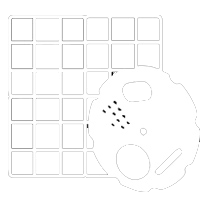
Beeswax from our apiaries 0.5 kg. Beeswax is a natural product that is created through metabolic conversion of honey and pollen in the body of certain bee species. In the honey bee, it is produced by worker bees during the 12th to 18th day of their life.When creating comb, the bee literally sweats wax on so-called wax mirrors on the lower side of the 3rd-6th segments (sternites) of the abdomen. The chitinous wall of the mirrors is perforated with microscopic holes through which, after increased effort, secretion flows as fresh wax. In the air it hardens and in the form of scales takes on the anatomical shape of the mirror. Even when the scale peels off, it remains partially inserted under the overhanging edge of the adjacent abdominal segment. To produce 1 kg of wax, bees consume 3.5-10 kg of honey and around 50 g of pollen.
The bee collects the scale as needed with the brush of the third pair of legs and processes it with mandibles. This creates a white cottage cheese-like mass.
New wax comb has a white-yellow color. Beekeeping professional terminology designates it with the term virgin comb. Each hatched bee leaves a cocoon in the cell - the comb changes color due to this and gradually darkens over time from the shade of baked bread to dark brown. Several-year-old combs are blackened.
Beeswax contains up to 284 different components. Not all have been identified, but about 111 of them are volatile substances. From a quantitative standpoint, the most significant are monoesters and diesters of saturated and unsaturated hydrocarbons, free fatty acids and hydroxypolyesters.
Beeswax is used for:
Pharmaceutical industry – in tablet coating material, reduces the dissolution rate of medicine and prolongs its effectiveness.
Medicine – component of sterile mixture (Horsley's wax) sealing material during skull bone operations.
Metal industry – conservation primarily of weapon systems.
Metal casting, jewelry making – production of casting molds using "lost wax" technology.
Light industry – wood impregnation, shoe polishing, special coating materials.
Restoration – component of period technologies when restoring historical objects.
Food industry - listed under designation E901 (for example glossy surface of candy).
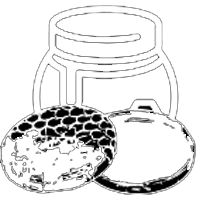
The wax images above are illustrative, the color and shape of the purchased piece may differ.