









BEEKEEPING EQUIPMENT, PRODUCTS AND BEEHIVES
A complete product range of beekeeping equipment in one place. Welcome to one of the largest beekeeping e-shop offering everything for successful beekeeping. We are the first e-shop with a range of services throughout the European Union. We aim to promote beekeeping and bee products not just with beekeepers but also among the public. Our company has been active in the beekeeping supplies market for more than a decade, we are a stable supplier offering a wide range of beekeeping equipment of a traditional kind as well as news from the world of beekeeping.
Our online beekeeping equipment doesn’t only offer equipment but also a number of bee products for the general public, who are then able learn about and try bee products. For the beekeeping enlightenment, we've also prepared an informational section on the website and for those of you who are beekeeping beginners, we have long and full detailed descriptions of all beekeeping equipment.
BEEKEEPING EQUIPMENT FOR All European beekeepers
The activity of beekeepers is a very rewarding hobby, which brings a lot of pleasure. Beekeeping is not just about trying to produce honey in hives but also and above all, it’s about improving the environment we live in. As beekeepers we contribute to the restoration of the environment, pollination of plants and agricultural crops.
BEEKEEPING EQUIPMENT - WHOLESALE AS WELL AS RETAIL
We strive to have all the necessary beekeeping equipment in constant supply for you. We are still expanding our range of beekeeping equipment, which now includes everything needed for beekeeping, we offer beehives, honey extractors, protective supplies, accessories for hives, frames, beekeeping literature, everything for breeding mothers and many other products. We strive to have all beekeeping equipment and bee products in stock and dispatch it in the most up-to-date terms.
We offer wholesale for our partners, currently delivering to more than 150 stores throughout the European Union (most of them in the Czech Republic, Slovakia, Poland, Germany and England).
HONEY EXTRACTOR AND OTHER BEEKEEPING EQUIPMENT
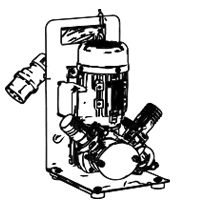
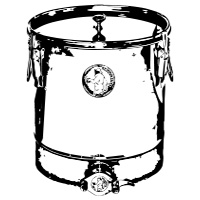
You can’t get honey without a honey extractor, at least not pure honey of good quality. Therefore, a honey extractor becomes an important tool for every beekeeper, but it’s also one of the most expensive devices. However, if you choose the correct and well-fitting honey extractor, the cost may decrease as you will know which one to choose so it isn’t unnecessarily too powerful and therefore expensive. We understand that beekeeping equipment and beekeeping accessories cost a certain amount of capital, so it’s advisable to point out that it’s possible to obtain financial subsidies not only for a honey extractor but also for innovation and improvement of beekeeping.
A WIDE RANGE OF BEEKEEPING EQUIPMENT
Our bee e-shop as well as our stone beekeeping shop offer you the widest range of beekeeping equipment in the Czech Republic. Our company is a pioneer for new technologies, we offer both traditional beekeeping equipment as well as news from the beekeeping world, which thanks to ourselves can be also tried by Czech beekeepers. We are currently focusing on expanding the range of professional equipment for larger beekeepers, beekeeping farms and operation premises. We offer and distribute products from most Czech companies in the profession and the world's leading beekeeping equipment manufacturers.
SOMETHING MORE
Our company also feels the need to support beekeeping not only in the Czech Republic but around the world. In addition to our business activities, we also offer a consultancy for our customers, where we can advise our customers how to choose goods and help with subsidies. We support and sponsor a wide range of beekeeping activities, from beekeeping exhibitions to beekeeping youth courses. We support a number of international projects that enhance awareness of beekeeping and bee products. At the same time, we contribute to it through the operation of information portals, we participate in various thematic exhibitions and beekeeping days. If you perform similar activities, please, don’t hesitate to contact us, we will gladly help you.
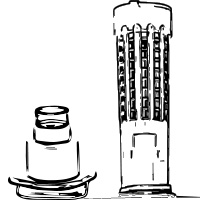
Warre hive
Warre
The Warre hive was designed by a French beekeeper called Abbe Warre in the early 20th century. The idea was to design a hive where the manipulation of the colony was kept to a minimum and the hive could increase in size, as the bees needed more space. The hive consists of a series of equal-sized chambers that are square and have a volume of about 20 litres.
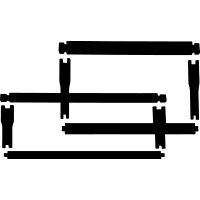
The top of each box is a series of eight wooden bars similar to the ones in
the Top Bar hive except that these do not abut but leave a gap for the bees to
pass through. As the colony develops and becomes larger, another box is placed
below the first to give the bees more room. This continues as the colony gets
larger and the theory is that the colony normally develops its comb downward
while the colony gets larger and stored honey is kept in the upper chambers.
There is a crown board and roof on the first box to provide weather protection.
The main characteristics are:
- There are no frames only top bars.
- All boxes are the same size.
- In effect it has top beespace.
- The volume of the hive can be increased by lifting the whole colony in its existing hive and placing a new box underneath.
- Honey is extracted from the frames in the upper boxes that have been used to raise brood.
- It is difficult to inspect the brood and check for disease. It requires strength to manage as the whole hive needs to be lifted when adding another compartment.
Natural beekeeping
Recently there has evolved a strong following for those advocating Natural
Beekeeping as a better method of keeping colonies of honey bees. Natural
Beekeeping is a broad term for a range of beekeeping practices that vary from
providing a cavity where bees are left alone to develop and (hopefully) survive
until ready to swarm and move elsewhere. At the other limit to Natural
Beekeeping there are those that keep bees in Warre or top bar hives and minimise
the number of inspections. The belief behind these methods of keeping bees is
that intervention by the beekeeper is both stressful and harmful to the colony
and should be minimised. Unfortunately, whilst this sounds like good practice,
it can result in colonies swarming and disturbing neighbours and it can also
mean that colonies can suffer and die because manipulations or medication has
not been applied to control disease.
There is much debate between conventional beekeepers who use hives with moveable
frames and those who use Top Bar hives about the best way to manage bees. This
debate will continue indefinitely as in the end all beekeepers care for the
animals they have and, while there are advantages in each way for the bee, there
are also problems with each approach. Only bad, incompetent or ignorant
beekeepers will treat their bees in a way that is harmful to them.
Because of the difficulties facing honey bees and the dramatic reduction in
feral colonies since the arrival of Varroa in Europe and across the world,
interest in keeping bees in a similar environment to the wild has increased.
Honey bees have not only suffered because of the prevalence of Varroa but, like
all pollinators, they have suffered because of a lack of habitat as farms have
become larger and more mechanised. These days, pollinators often appear to exist
in greater numbers in urban areas than they do in the countryside!
Excerpt from the book: The bbka guide to beekeeping
Best-selling products


 In stock