Queen Introduction Shipping Cage - yellow
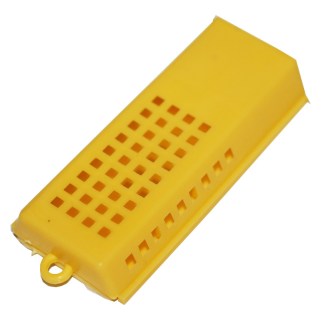
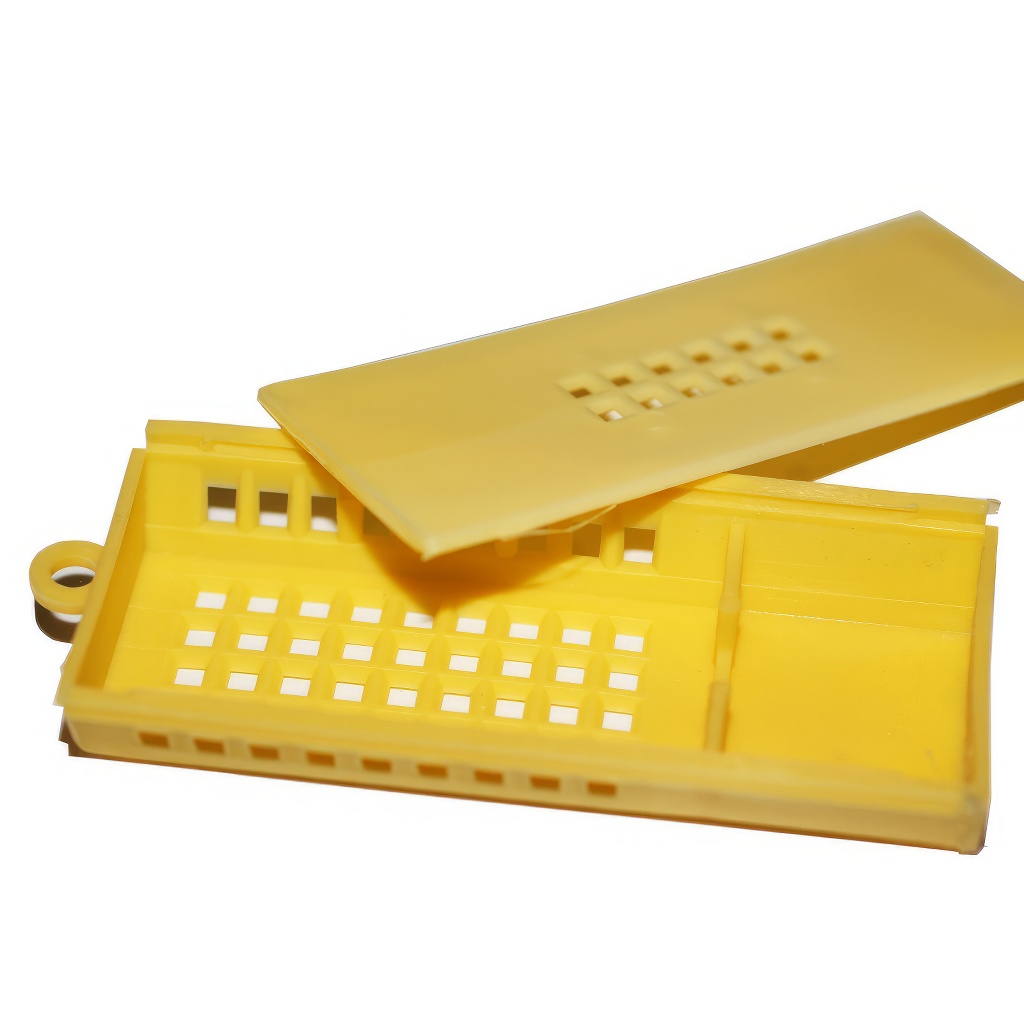
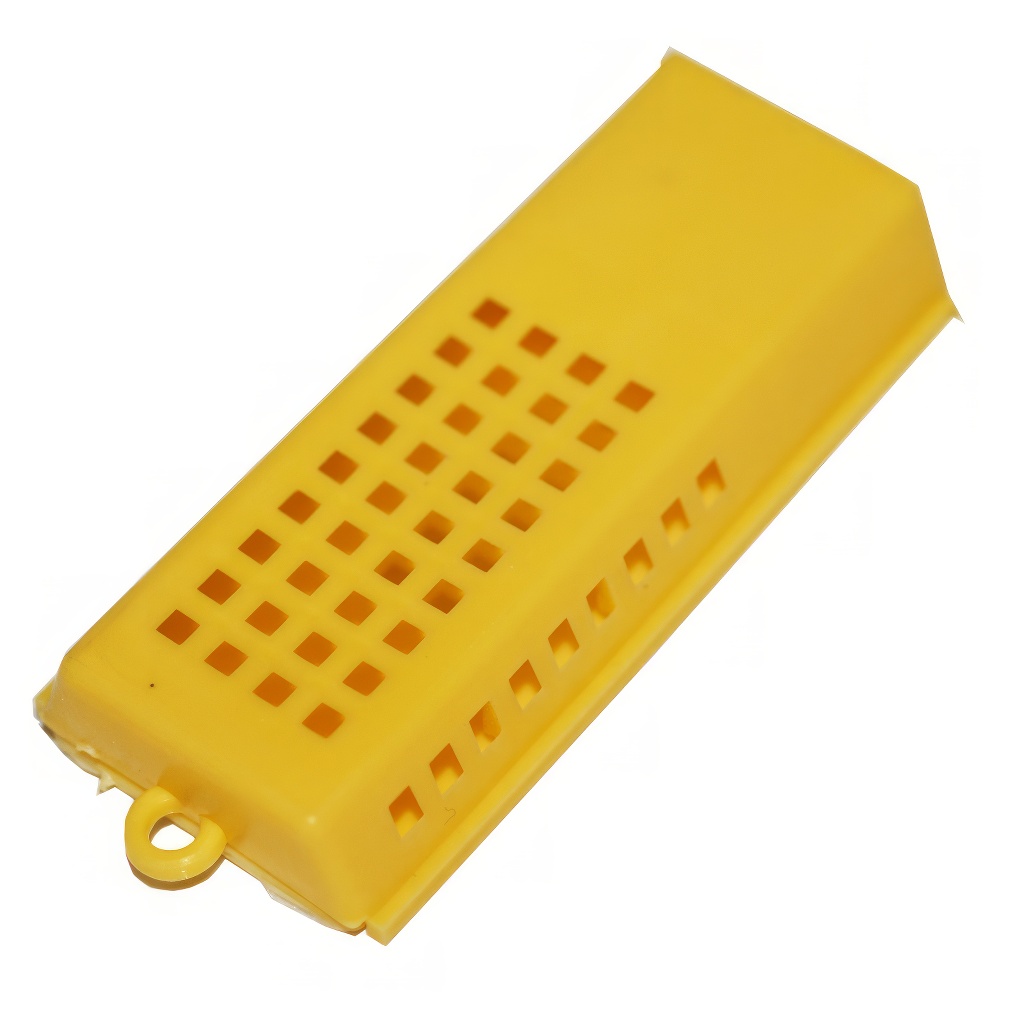
Queen Bee Shipping and Introduction Cage – Plastic Type 2, Yellow
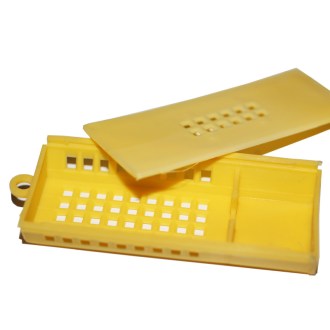
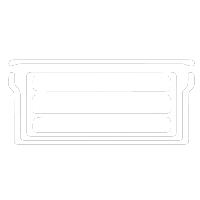
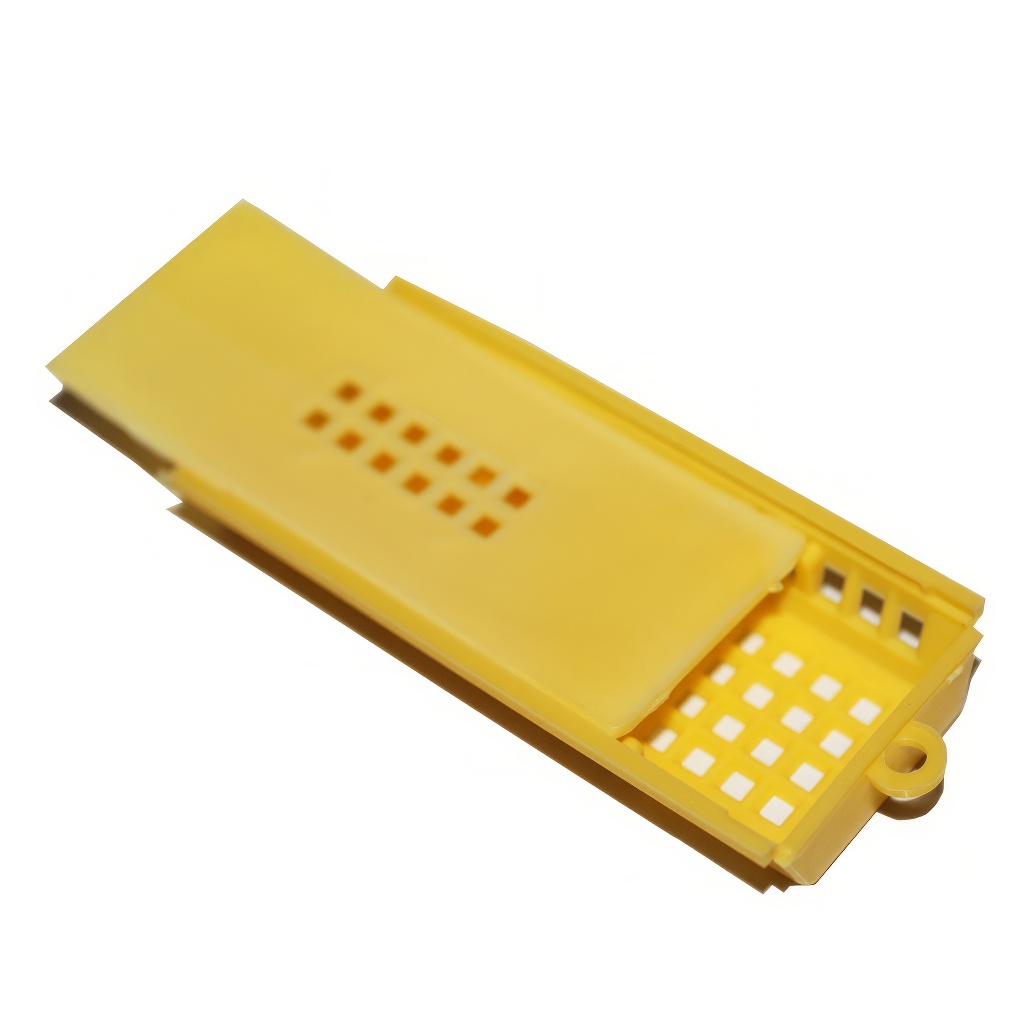
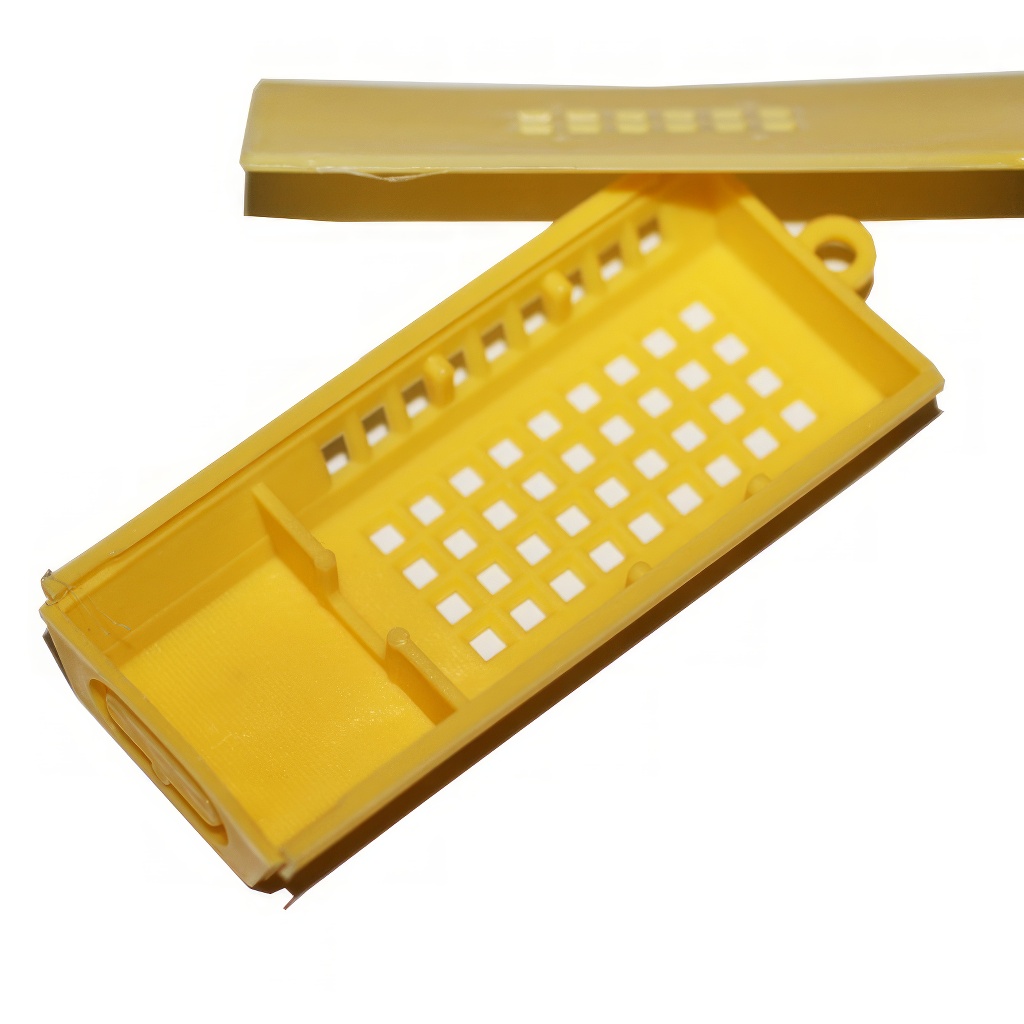
Safety during transport and when introducing a new queen to the colony. Do you need to reduce the risk of damage or loss of a queen bee during transport or when introducing her to the hive? This practical shipping and introduction cage in highly visible yellow color (easy to find in the dim hive) provides the queen with a safe space and the beekeeper with peace of mind while working. The cage consists of two parts, with space inside for the queen and for feed – most commonly candy (fondant). Thanks to its slim design, you can place it directly between frames in the brood chamber, where the queen has contact with the bees through a screen while maintaining stable temperature conditions. The cage protects the queen from initial aggression from the bees and supports gradual and reliable acceptance.
Advantages for Beekeepers and Practical Design Solution
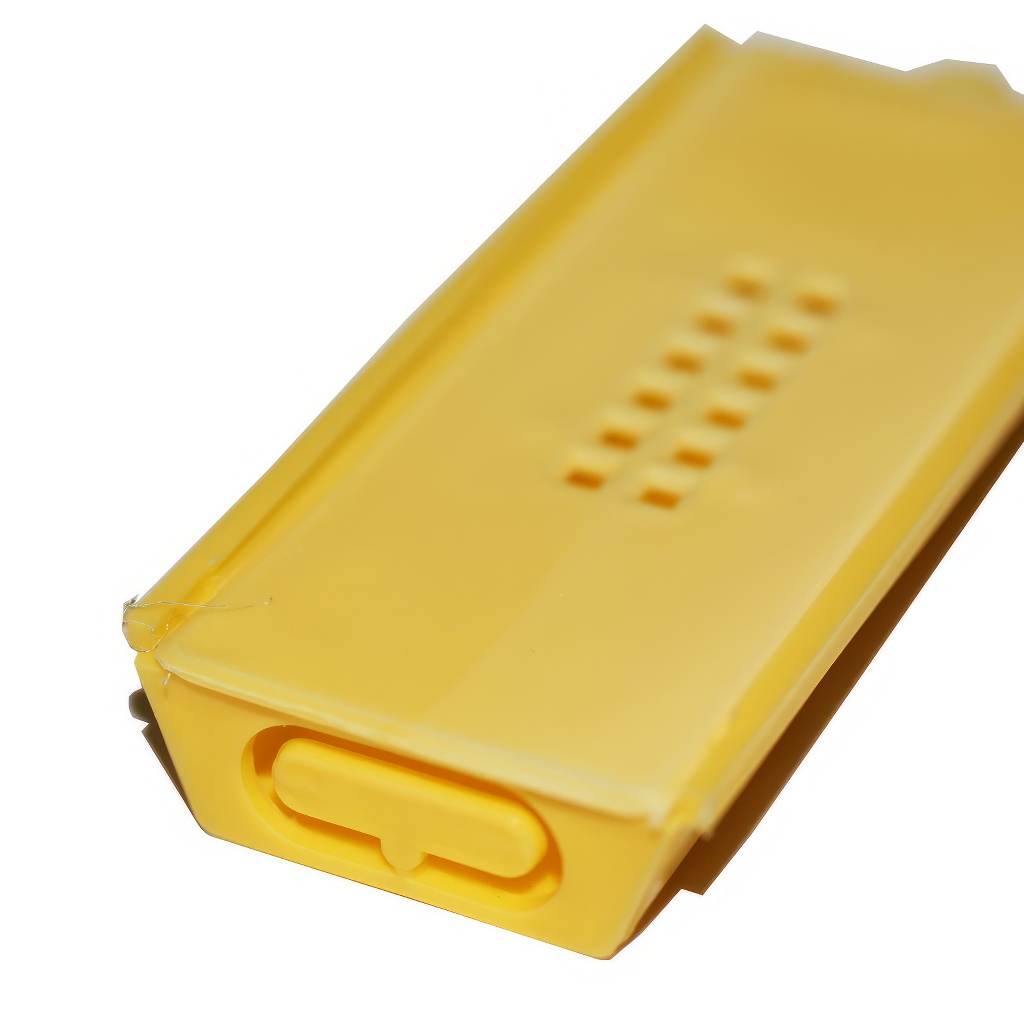
Gradual release of the queen for higher acceptance success: The cage has a candy (feed) chamber. After breaking out the small door, fill it with candy, which the bees gradually chew through (usually around 2 days). During this time, the queen's pheromones spread throughout the colony, the bees become accustomed to her scent, and the chance of safe acceptance significantly increases. Durable material and reusability: Sturdy plastic with 2 mm thickness ensures long life. The circular opening is equipped with a plug – after breaking out the door, the opening can be easily closed again and the cage used repeatedly. Versatile use: Thanks to the hanging eye, you can quickly and securely attach the cage to a frame. You can let the bees release the queen through the candy, or manually release her through the circular opening after 2–3 days of adaptation.
Guidelines for Successful Queen Introduction
Before replacement, the old queen must be removed and the colony must be truly queenless. Worker bees may initially perceive a foreign queen as an intruder and attempt to kill her – especially if the original queen is still present in the hive, or if there is another queen (e.g., newly emerged) in the colony. The cage with the new queen should be inserted as soon as possible, ideally within 30 minutes of removing or killing the old queen. With longer waiting periods, bees often begin building emergency queen cells.
If the colony has been queenless for more than 2 days, all emergency queen cells must be carefully removed (especially capped ones – a queen may have already emerged). Best results occur when introducing into a queenless colony without open brood (larger uncapped larvae may remain), with reliably removed queen cells. Only then insert the introduction cage between frames in the brood chamber.
Cage Preparation Step by Step
Gently press candy into the candy (feed) chamber. Crystallized honey can also be used, but with softer or liquid honey there is a risk of flowing and trapping the queen, which can be fatal for the queen. Insert the queen into the cage by simply sliding out the top cover and then quickly but carefully closing it.
For shipping (e.g., by mail): Add approximately 5 attendant worker bees to the cage to care for the queen. In this mode, do not break out the candy door on the side.
When introducing into the hive (brood chamber): Release any attendant bees and leave the queen in the cage alone. Then break out the side candy door so that the resident bees can eat through the candy and gradually safely release the queen.

Technical Specifications
| Length | 80 mm (total external dimension approx. 8.5 cm) |
| Width | 38 mm (total external dimension approx. 4 cm) |
| Height | 13 mm (total external dimension approx. 1.5 cm) |
| Material Thickness | 2 mm |
| Material | Durable plastic |
| Color | Yellow (for easy orientation in the hive) |